
TEMPO.CO, Jakarta - Deputy Minister of Finance Juda Agung has stated that Indonesia's economy is currently far from a crisis, as seen in 1997 and 1998. He mentioned that the fiscal indicator, payment balance, and financial system remain stable.
Juda explained that historically, economic crises generally arise from three main sources, but there have been no signs of these in Indonesia's economy so far.
He cited the economic crisis in Latin America in the 1980s. This crisis emerged when the fiscal deficit increased, and the government could no longer obtain financing because investors lost confidence. As a result, government bonds were not sold in the market.
However, Juda says that Indonesia's current fiscal deficit remains below 3 percent and that the state budget is still trusted by domestic and foreign investors. This is reflected in the yield of government bonds, which remains between 6.5 and 6.7 percent and has not increased significantly.
"So, there are no signs of a crisis stemming from fiscal issues," said Juda at the National Conference on Regional Economic Development (KNPED) in Jakarta on Monday, May 25, 2026, as reported by ANTARA.
Furthermore, he mentioned that crises like the one in 1997-1998 occurred when many companies took out large foreign loans. Many companies collapsed when the exchange rate weakened and a sudden stop occurred because they could not repay their foreign debts, which put a heavy strain on the payment balance.
However, Juda says that Indonesia's payment balance is currently relatively healthy and balanced, showing no signs of a similar situation. "Currently, when we look at our payment balance figures, they are relatively healthy and relatively balanced. So, there are no signs of a payment balance crisis," he said.
He added that a crisis can also be triggered by overly aggressive credit expansion and the bursting of asset bubbles in specific sectors such as property, which then triggers a banking system collapse, as seen in the 2008 global crisis in the United States.
However, Juda believes that there are no similar pressure indicators in Indonesia's financial system at present. "So, the three sources of the crisis are not evident in the data we have observed up to now," said Juda.
Overall, he emphasized that Indonesia's economy continues to grow strongly. In the first quarter of 2026, it grew by 5.61 percent year-on-year, and inflation remained at 2.42 percent in April 2026.
As a major source of economic growth, household consumption also grew by 5.52 percent in the first quarter of 2026. On the other hand, government spending also grew by 22 percent. Juda stated that this shows that fiscal policies are still working to drive economic growth and maintain people's purchasing power.
He noted that the state budget (APBN) serves two functions: acting as a shock absorber and an engine of growth.
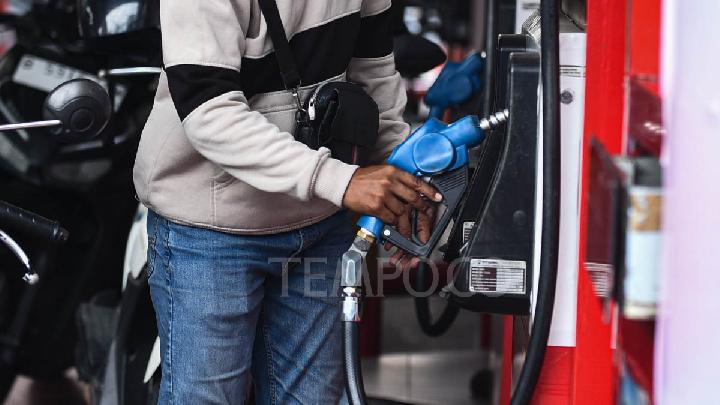
Like a shock absorber, the state budget provides support during economic pressure, including stabilizing energy prices amid rising global oil prices and keeping food prices stable.
Meanwhile, as an engine of growth, the state budget is used to accelerate government spending from the beginning of the year so that economic growth can occur more evenly throughout 2026. This is different from the previous pattern, which tended to accumulate in the fourth quarter.
He added that state revenue reached Rp918 trillion by April 2026, marking a 13.3 percent growth. Meanwhile, tax revenue grew by 16.1 percent. Conversely, state spending increased by 34.3 percent and continues to drive economic growth in the second quarter of 2026.
Although state expenditure increased significantly, Juda mentioned that the state budget deficit remains at 0.64 percent of GDP, which is down from 0.92 percent in March 2025. Furthermore, the primary balance also recorded a surplus in April 2026.
He stated that this condition indicates the state budget remains expansionary yet cautious amid challenging global circumstances. Despite the rise in global oil prices, the state has maintained fiscal discipline.
"In a challenging global situation, we must maintain both. How the state budget can drive the economy, while at the same time also maintaining fiscal discipline amidst the rise in oil prices. And both of these have been successful, as seen in the high growth, maintained inflation, and preserved deficit," said Juda.
Read: Airlangga: Current Rupiah Weakening Unlike Past Crises
Click here to get the latest news updates from Tempo on Google News
Bandung Zoo Faces Animal Feed Crisis as Funding Nears End
20 hari lalu

The recurring crisis of providing food for the animals continues to haunt Bandung Zoo.
JP Morgan: Indonesia Ranks Second in Global Energy Resilience
31 hari lalu
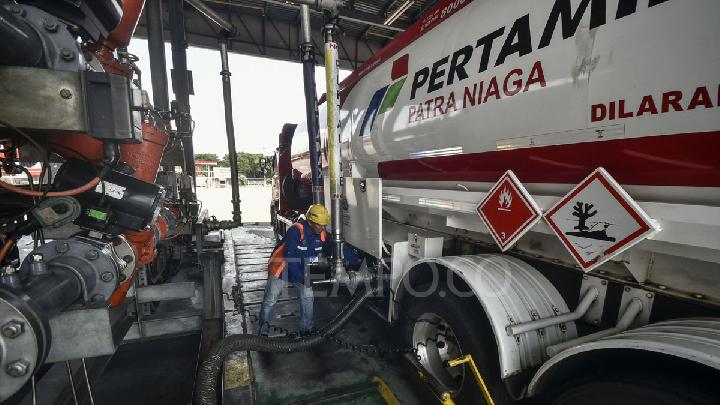
The JPMorgan report ranked Indonesia's energy resilience at 77%, below South Africa (79%) but above China (76%) and the United States (70%).
Jokowi: World Facing Triple Crisis and Potential Ripple Effect
50 hari lalu

Former President Jokowi has warned that the global landscape is under intense, multi-layered pressure.
Energy Crisis: Europeans Urged to Work from Home, Cut Highway Speeds
54 hari lalu

EU Energy Commissioner also encouraged greater use of public transportation, carpooling, and fuel-efficient driving practices to help reduce demand.
No Recession in Sight for Indonesia, Finance Minister Says
59 hari lalu

Minister of Finance Purbaya Yudhi Sadewa ensures Indonesia will not head into recession, let alone a crisis.
Today's Top 3 News: Why Rupiah Could Weaken to 20,000 per Dollar
59 hari lalu

Here is the list of the top 3 news on Tempo English today.
How Countries Are Tackling the Global Energy Crisis
26 Maret 2026
With energy prices soaring and the Strait of Hormuz still closed, countries are scrambling to cut demand - from 4-day workweeks to fuel rationing.
Prabowo Calls Global Crisis a 'Blessing in Disguise' for Indonesia
12 Maret 2026

President Prabowo Subianto described the current global crisis as a hidden blessing, saying Indonesia will emerge stronger.
Indonesia Forms Crisis Response Team Amid US-Iran Conflict
7 Maret 2026

The team will monitor the situation intensively to ensure the safety of Indonesian citizens if the security conditions worsen.
Apple Faces AI Chip Component Crisis
15 Januari 2026

Apple company is reportedly facing a supply chain crisis involving a key component in chip manufacturing.