August 18, 2026 | 04:22 pm

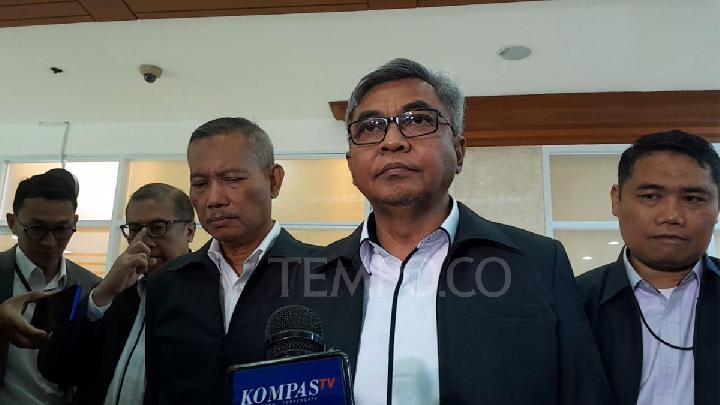
TEMPO.CO, Jakarta – The Indonesian government has issued guidelines for the implementation of the Kredit Perempuan Prasejahtera (KPPS), a credit program for women from economically vulnerable families, with a flat interest rate of 8 percent a year.
The guidelines are stipulated in Coordinating Minister for Economic Affairs Regulation No. 7 of 2026 on the Implementation Guidelines for Kredit Perempuan Prasejahtera, which was enacted on August 5, 2026.
The regulation provides the legal framework for KPPS, a government credit scheme that provides productive financing for women from economically vulnerable families who are already running or planning to start businesses.
Under KPPS, eligible recipients can obtain financing of up to Rp15 million ($925) per agreement at a flat interest rate or margin of 8 percent a year, without requiring additional collateral.
“The issuance of this regulation follows President Prabowo Subianto’s directive to significantly reduce the financing burden for the most vulnerable groups. It also follows up on the outcome of the MSME Financing Policy Committee’s coordination meeting on June 22, 2026,” Coordinating Minister for Economic Affairs Airlangga Hartarto said in a statement in Jakarta on Tuesday.
Interest burden cut from 24 percent
Ultra-micro business owners, particularly women from economically vulnerable families, have typically faced financing rates of around 24 percent a year. Under KPPS, the government will cut the interest burden to a flat 8 percent through interest or margin subsidies.
The regulation outlines several objectives for the program, including expanding access to productive credit and financing for women from economically vulnerable families, creating business opportunities and jobs, and supporting economic growth.
KPPS targets women from economically vulnerable families who are verified through the National Single Socioeconomic Data (DTSEN), specifically those in deciles 1 through 4.
Applicants must also have a national identification number (NIK) and family card (KK), and belong to a group of at least five members living in the same area.
“To ensure that no prospective beneficiary is left behind, the regulation also allows lenders to objectively assess applicants’ eligibility based on the applicable criteria,” Airlangga said.
The financing scheme is tailored to the characteristics of ultra-micro businesses. Each recipient can receive up to Rp15 million per agreement, either as a lump sum or in stages, based on an agreement with the lender.
Recipients can also access KPPS through multiple agreements without a limit on the number of times they can apply. This allows financing to expand as their businesses grow.
The financing period is set at a maximum of 24 months and, outside restructuring arrangements, may be extended to a maximum of 36 months. Repayment terms will be agreed upon by recipients and lenders.
KPPS financing is intended for productive activities in sectors including agriculture, marine and fisheries, manufacturing, construction, tourism, trade, and production-related services.
Business assistance included
In addition to financing, KPPS includes empowerment services as an integral part of the program. Lenders are required to provide business assistance, financial management education for households and businesses, as well as training to improve business capacity and entrepreneurship skills.
Beneficiary groups will also apply a joint-liability mechanism to promote repayment discipline and solidarity among members. KPPS recipients may independently enroll in BPJS Ketenagakerjaan, Indonesia’s employment social security program, to obtain protection while running their businesses.
The regulation also protects recipients by prohibiting lenders from requiring additional collateral beyond the business or assets being financed.
From the lender side, KPPS can be distributed through financial institutions and legally incorporated cooperatives that are financially sound, perform well, and have data systems integrated with the Program Credit Information System (SIKP).
Implementation of KPPS will be monitored through a supervisory coordination forum coordinated by the Financial and Development Supervisory Agency (BPKP), together with relevant ministries and government agencies and financial sector authorities.
The MSME Financing Policy Committee will also conduct regular evaluations to ensure the quality of KPPS implementation and disbursement.
The government estimates that up to 9.16 million women running ultra-micro businesses across Indonesia could potentially benefit from the program.
BCA Reports Rp29.5 Trillion First-Half Profit, Credit Surpasses Rp1 Quadrillion
20 hari lalu

BCA posted Rp29.5 trillion in first-half 2026 profit as its loan portfolio surpassed Rp1 quadrillion for the first time, driven by credit growth.
What Caused Indonesia's Consumer Confidence Index to Fall in June?
40 hari lalu
Bank Indonesia (BI) recorded the Consumer Confidence Index (CCI) at 117.8 in June 2026.
Gojek Drivers Eligible for Zero Down Payment Subsidized Mortgages
46 hari lalu
Gojek drivers can now apply for government-subsidized mortgages with zero down payment under a new partnership with BP Tapera.
BNI Completes Rp28.26 Billion Refund to Aek Nabara Credit Union
22 April 2026
BNI also apologized to the public, especially the Catholic community and Aek Nabara Parish Credit Union members, for disruption and concern caused.
3 Steps to Shield Banks from Geopolitical Risks
9 Maret 2026
Chair of Perbanas, Hery Gunardi, stated that the banking industry also faced challenges of global uncertainties due to geopolitical conflicts in the Middle East.
OJK: Moody's Report Unlikely to Shake Indonesia's Banking Sector
10 Februari 2026

The Financial Services Authority considers Moody's revision of Indonesia's sovereign credit rating outlook a shared responsibility among all stakeholders.
OJK Reports 103,000 Debtors Affected by the Sumatra Disaster
11 Desember 2025

The OJK recorded around 103,000 debtors affected by disasters in Aceh, West Sumatra, and North Sumatra.
Bank Indonesia Outlines Monetary Policy Direction for 2026
29 November 2025
This monetary policy direction is chosen amidst the ongoing global uncertainty.
Indonesia Allocates Rp130 Trillion for Housing Credit in 2026
17 November 2025
Indonesian government aims to disburse Rp28 trillion in housing credit by the first quarter of 2026.
MSME Minister Confirms KUR Loans Under Rp100 Million Require No Collateral
17 November 2025
The Minister of MSME stated that some KUR disbursing banks are still requesting collateral for loans up to Rp100 million.