September 14, 2026 | 02:39 pm
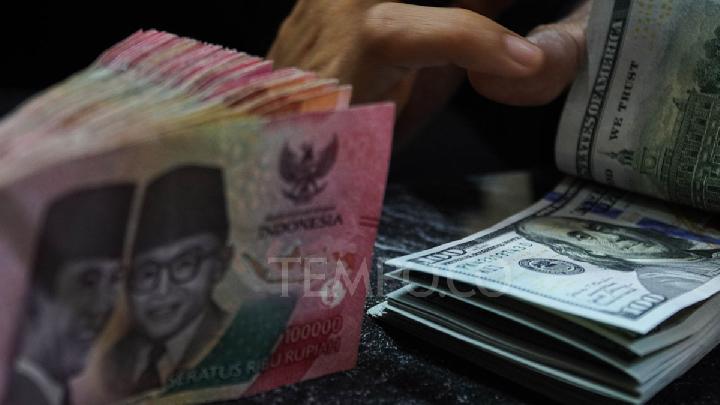
TEMPO.CO, Jakarta - Bank Mandiri’s Office of the Chief Economist forecasts that the rupiah exchange rate is likely to weaken in today's trading. Bank Mandiri predicts that the rupiah exchange rate will move in the range of Rp17,590-17,685 per US dollar.
Bank Mandiri Head Economist Andry Asmoro said the tendency for the rupiah exchange rate to weaken is influenced by emerging pressure from global oil prices, yields on U.S. Treasury debt, and expectations of a Federal Reserve interest rate hike this week.
“However, the relatively stable DXY and positive foreign capital inflows in the bond market may limit the extent of rupiah depreciation,” he said in a written statement on Monday, September 14, 2026.
Bank Mandiri reported that Brent crude oil fell by 2.81 percent to US$104.6 per barrel on Friday, September 11, 2026. However, crude oil prices rose by about 3 percent to US$107 per barrel on Monday morning. Year to date, Brent crude oil has increased by 71.91 percent.
According to Andry, the increase in oil prices is triggered by new attacks on Saudi Arabian energy infrastructure and ships in the Gulf, raising concerns about global oil supply.
“The closure of the East-West Saudi Arabian pipeline and the delay in discussions on the reopening of the Strait of Hormuz increase the risk of prolonged energy disruptions and re-trigger global inflationary pressure,” he said.
Meanwhile, the yield on 10-year government bonds increased by 4.2 basis points to 7.15 percent on Monday. Additionally, the five-year yield increased by 9.2 basis points, reaching 7.03 percent. According to Andry, the conditions reflect a global bond sell-off and U.S. Treasury yields nearing 5 percent. However, foreign investors recorded a net inflow of Rp10.1 trillion into government bonds on September 10. "Bringing the year-to-date and month-to-date net inflows to Rp11.7 trillion and Rp40.8 trillion, respectively," he said.
In a separate statement, Fakhrul Fulvian, the chief economist at Trimegah Sekuritas Indonesia, said that increasing expectations of a Fed interest rate hike, oil prices surpassing US$100 per barrel again, and U.S. Treasury yields approaching 5 percent indicate that Indonesia needs to prepare for a period of higher global financing costs.
Fakhrul said that Indonesia's challenge at this time is not only the direction of the Fed interest rate, but also the potential for a longer-lasting change in the global clearing price of capital. “What we need to start anticipating now is the possibility of global interest rates needing to rise again. If that happens, the pressure on emerging markets will come not only through the dollar, but also through the repricing of all global financing costs,” he said.
According to Fakhrul, Indonesia should not respond to these conditions by expecting the BI Rate to bear the entire stabilization burden. Fakhrul said the BI Rate remains a monetary anchor. "However, the issue of the rupiah, domestic liquidity, capital flows, and oil-related inflation do not all have the same ailments. Therefore, the remedy should not be the same,” he said.
In a UST 10-year bond approaching 5 percent, Fakhrul believes that SUN yields should be given room for price discovery. Trimegah believes that the 10-year SUN yield could reach a market-clearing yield of 7.3–7.5 percent.
Fakhrul said that the increase in SUN yields toward 7.3–7.5 percent should not be seen as a failure to maintain the market. “Instead, yields that find a clearing price can be one of the guardrails for the rupiah by helping to maintain Indonesia's asset attractiveness when global yields rise,” he said.
Although external pressure has increased due to rising oil prices, high U.S. Treasury yields, and a more hawkish Federal Reserve stance, Fakhrul believes that the risk of rupiah depreciation from its current level should be relatively limited if appropriate and consistent policy responses are made. Fakhrul said the potential rupiah depreciation would only reach Rp17,800 per US dollar
Fakhrul says that Indonesia currently has a much more comprehensive policy toolkit than in previous episodes of external pressure. Bank Indonesia not only has a BI Rate, but also spot interventions, Domestic Non-Deliverable Forward (DNDF), liquidity management, money and forex market instruments, and the development of Local Currency Transaction (LCT).
“I don't see the current conditions as a reason to be too bearish on the rupiah. The pressure is there, but its depreciation from the current level should be relatively limited if our policy reaction function is appropriate,” said Fakhrul.
Read: Non-Subsidized Fuel Prices Remain Stable Since Early September 2026
Click here to get the latest news updates from Tempo on Google News
Rupiah Weakens as Investors Await US PPI Data
3 hari lalu
The rupiah weakened by 36 points to Rp17,547 per US dollar from Rp17,511.
August Consumer Confidence Boosts Rupiah
5 hari lalu
In August 2026, Bank Indonesia recorded the Consumer Confidence Index at 118.5, up from 116.8 in July.
Rupiah Strengthens to Rp17,640: What Drove the Gain?
6 hari lalu
Natural disasters, forest fires, and escalating tensions in the Strait of Hormuz drove movements in the rupiah exchange rate against the US dollar.
Rupiah Weakens in Early September: What's Behind the Decline?
12 hari lalu
The rupiah exchange rate on Tuesday weakened by 22 points, or 0.12%, at Rp17,744 per US dollar.
Why Is the Rupiah Expected to Weaken in September?
13 hari lalu

The rupiah is expected to remain volatile in September as hawkish Fed signals and key U.S. economic data weigh on the currency.
Rupiah Drops amid Escalating US-Iran Tension
13 hari lalu
The Indonesian rupiah weakened against the US dollar amid escalating US-Iran conflict and hawkish Fed signals.
Rupiah Stability Comes with a Hot-Money Trap
14 hari lalu

The rupiah's recovery masks a growing reliance on hot money. Bank Indonesia is buying stability today at the cost of greater vulnerability tomorrow.
Could Inflation and US Rates Move the Rupiah Next Week?
16 hari lalu
Analyst Ibrahim Assuaibi expects the rupiah to trade at Rp17,600-Rp17,900 per U.S. dollar next week amid inflation, trade and global risks.
Hippindo: Rupiah Weakens as Tourists Flock to Indonesia
19 hari lalu

Foreign tourists are taking advantage of the weak rupiah, which makes travel and shopping cheaper.
Rupiah Weakens Ahead of Fed's Warsh Speech at Jackson Hole
19 hari lalu
The rupiah exchange rate is down from Rp17,723 to Rp17,725 per US dollar.