TEMPO.CO, Jakarta – The United States (US), Denmark and Greenland have signed a new defense agreement allowing Washington to establish two additional military facilities in Greenland while reaffirming Danish sovereignty over the strategically important Arctic territory.
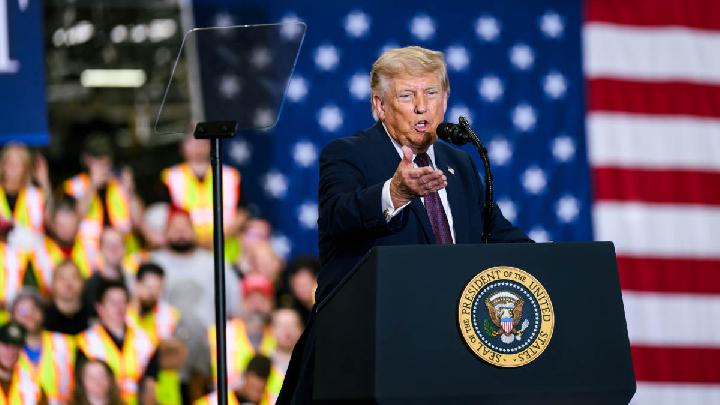
US President Donald Trump, Danish Prime Minister Mette Frederiksen and Greenland Prime Minister Jens-Frederik Nielsen signed the agreement on Sept. 22 on the sidelines of the United Nations General Assembly in New York, as reported by BBC.
Trump said the United States would immediately begin developing a larger military presence in Greenland, including two major military bases. The agreement expands Washington's existing military role on the island while formally recognizing Denmark's sovereignty and Greenland's right to self-determination.
The deal amends and updates a 1951 defense agreement between the United States and Denmark. It still requires approval from both the Danish and Greenlandic parliaments.
Where Will the US Build the New Military Bases?
The agreement identifies Narsarsuaq in southern Greenland and Mestersvig in eastern Greenland as locations for additional US defense areas, according to Al Jazeera.
Narsarsuaq
Narsarsuaq is a former US military base and civilian airport in southern Greenland. The United States operated the site during World War II and the Cold War before closing its military base there in 1958.
The site has a large runway and access to deep water. US military engineers recently surveyed the area, according to US North Command, making it a suitable location for renewed military activity.
The new agreement would effectively bring the former US military site back into Washington's defense network in Greenland.
Mestersvig
Mestersvig is a remote military outpost in eastern Greenland that is currently used by Denmark's Sirius Dog Sled Patrol, a special forces unit responsible for patrolling the vast Arctic territory.
Unlike Narsarsuaq, Mestersvig is relatively undeveloped and isolated. The agreement allows the United States to establish an additional defense area there, although the precise arrangements and technical details have yet to be finalized.
The locations and operations of the new facilities must be mutually agreed upon by the United States, Denmark and Greenland.
What Does the Agreement Mean for Greenland's Sovereignty?
The agreement does not transfer Greenlandic territory to the United States.
It explicitly recognizes Denmark's sovereignty and territorial integrity while also recognizing Greenland's right to self-determination. Greenland is an autonomous territory within the Kingdom of Denmark.
The agreement also states that Greenland would remain part of NATO if it becomes independent in the future.
For Greenland, the agreement marks a significant shift from the confrontation that began after Trump repeatedly called for greater US control of the territory.
Nielsen described the deal as a "win-win-win" and said it takes into account Greenland's people, rights, livelihoods and development.
Frederiksen likewise said the agreement respects both Danish sovereignty and Greenland's right to self-determination.
How Will the Deal Expand US Military Presence?
The United States already operates Pituffik Space Base in northwestern Greenland, where American personnel carry out missile warning and space-related missions.
The new agreement allows Washington to modernize and expand its activities at Pituffik while establishing the additional defense areas at Narsarsuaq and Mestersvig.
The agreement also gives the United States broader military access, including rights related to aircraft operations and undersea access in Greenland.
At the same time, the pact places restrictions on other countries. Non-NATO states will not be permitted to establish manned or unmanned military installations or maintain a persistent military presence in Greenland.
The agreement also contains provisions designed to prevent sensitive investments by countries outside NATO and the European Union that could pose security concerns.
Why Is Greenland Strategically Important?
Greenland sits between North America and Europe and occupies a strategically important position in the Arctic and North Atlantic.
Its location has long made the territory important to US and NATO defense planning. Greenland also possesses significant mineral resources, including rare-earth deposits, adding an economic dimension to the strategic competition surrounding the Arctic.
Trump has repeatedly cited security concerns involving Russia and China when arguing that the United States needs a stronger position in Greenland.
The new agreement specifically prevents non-NATO countries from establishing a military presence on the island, effectively limiting the ability of potential US rivals to develop their own bases there.
Russia said it was not involved in negotiations over the agreement. Kremlin spokesman Dmitry Peskov said cooperation with Russia in the Arctic was currently not on the agenda, while China has not publicly commented on the deal.
A Shift After Months of Tension
The agreement follows more than a year of tension after Trump repeatedly threatened to acquire or take control of Greenland, citing its strategic location and natural resources.
His comments triggered strong opposition in Greenland, Denmark and other European countries and raised concerns about the impact on the NATO alliance.
The standoff intensified in early 2026 before negotiations between Washington, Copenhagen and Nuuk eventually shifted toward a security agreement rather than a transfer of sovereignty.
The final pact therefore gives Washington a substantially expanded military role without granting the United States ownership of Greenland.
NATO welcomed the agreement, saying it would help advance security, stability and cooperation in the Arctic and North Atlantic.
For Denmark and Greenland, the agreement provides a framework for closer US military cooperation while preserving the kingdom's sovereignty and Greenland's right to determine its future.