January 12, 2026 | 02:06 pm

TEMPO.CO, Jakarta - The proposal for indirect regional head elections offers no benefits for political parties. It is a way of accommodating the return of the election of the president to the People’s Consultative Assembly.
THE idea from the leaders of political parties supporting President Prabowo Subianto to return regional head elections to the Regional Legislative Council (DPRD) has no firm basis. High costs are a cliché, a broken record played so many times that is easily debunked. These elites know that the high costs are not because the system is flawed, but because of the horse-trading that goes on among them.
Among political parties, “dowries” are common in the form of bribes paid to party elites by regional head candidates in order to secure support. After securing a ticket from a party, candidates must shell out funds for campaigning, props, witness fees, and even voter bribery. These practices are an open secret, as numerous studies have revealed the triggers for the high-cost regional elections.
The Regional Autonomy Implementation Monitoring Committee (KPPOD) estimates that a candidate for regent or mayor spends a minimum of Rp30 billion, while a gubernatorial candidate spends Rp150 billion. In his book, The Paradox of Indonesia and Its Solutions, Prabowo argues that these exorbitant costs drive candidates to seek the support of wealthy financiers. Once these candidates take power, it is these financiers who control policies to favor their own businesses and interests.
This linear cause-and-effect occurs not because the system itself is flawed. Indonesia’s direct election regulations are already equipped with various safeguards, from contribution limits and mandatory audit transparency to prohibitions on money politics. But weak law enforcement and the refusal of politicians to play by the rules have driven the high cost of elections.
Prabowo himself has used these practices. After winning the presidency in 2024, he rolled out the red carpet to oil palm and coal tycoon Andi Syamsuddin Arsyad alias Haji Isam, who had provided support. Without going through a tender process, Isam was awarded the food estate project in Papua, and was able to put forward close associates for cabinet posts.
On paper, indirect regional elections would ultimately only benefit the Golkar Party. Given Golkar’s control of Regional Legislative Councils in half of the country’s provinces and in more than 144 regencies and cities, indirect elections would merely serve as a vehicle to install its politicians as regional heads. The Gerindra Party, the National Awakening Party (PKB), and the National Mandate Party (PAN)—the very groups proposing this idea—would end up as mere cheerleaders.
Or, suppose Prabowo employs an iron fist to force through regional heads from Gerindra, other parties would not simply fall in line. Without a majority of seats in the regions, Gerindra would lack the leverage to push through its interests once their party’s candidates are inaugurated.
Therefore, there is no rational justification for the idea of returning regional elections to the DPRD from any perspective. Politically, no party will benefit from this idea, which is slated to be included in the omnibus Politics Law package. The absence of a majority party ensures that political costs will remain high, as “horse-trading” will simply move to the DPRD meeting rooms.
The most logical reason for the indirect regional elections proposal is that it serves as a stepping stone for an amendment to the 1945 Constitution to return the election of the president to the People’s Consultative Assembly (MPR). Gerindra’s support for the indirect regional elections will be a bargaining chip for support from Golkar and the other parties for indirect presidential elections, especially if the public supports the idea of indirect regional elections.
As the holder of the MPR mandate, the President would draw up the State Policy Guidelines (GBHN) as happened during the New Order era. The GBHN is the idea of the Indonesian Democratic Party of Struggle (PDI-P), which still opposes the indirect regional head elections. With its proposal of the election of the president by the MPR, it is more likely that the PDI-P will join Prabowo’s coalition.
The PDI-P remains traumatized by its experience of propelling Joko Widodo to the presidency. They found they could not control a directly elected president. As a party that has failed to undergo regeneration, the PDI-P would be able to control any president from its ranks through an indirect election mechanism. As the party with the most seats in the DPR, the PDI-P wants the president to be elected by the MPR.
The interests of all parties would be accommodated. The presidency could simply be rotated among the parties. Prabowo would then be free to advance his vision of “command politics” to achieve a Chinese-style “state capitalism,” as he envisioned in his book, The Paradox of Indonesia and Its Solutions.
Prabowo Inaugurates 166 People's Schools Across Indonesia
2 jam lalu
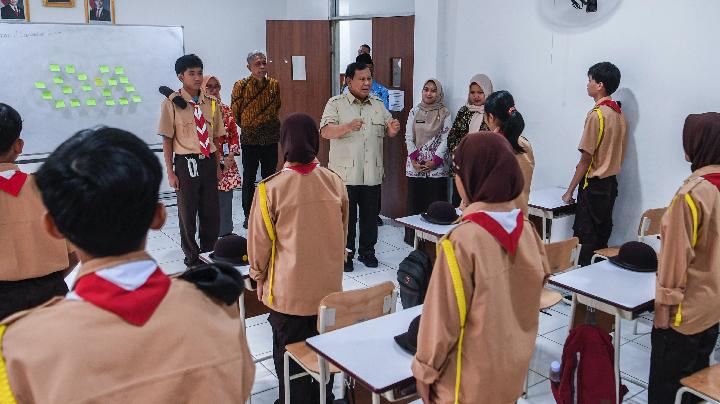
Indonesian President Prabowo Subianto inaugurates 166 People's Schools spread across 34 provinces, on Monday, January 12, 2026.
Prabowo Pushes Textile Revamp, Chip Industry Drive
4 jam lalu
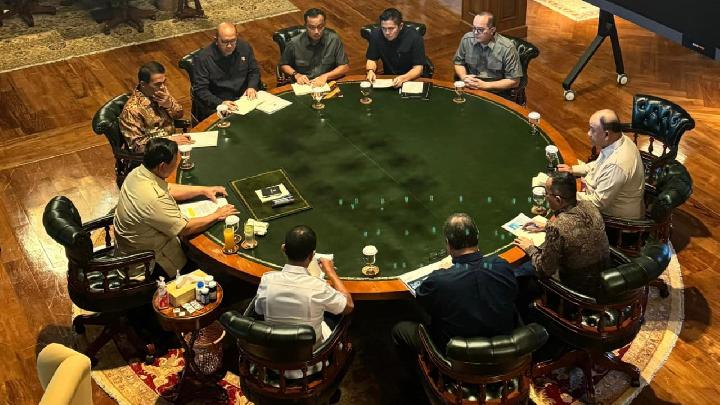
Indonesian President Prabowo held a limited meeting to finalize national industry transformation in textile industry & automotive industry chips.
Prabowo Meets Ministers in Hambalang to Boost Industry
6 jam lalu
Indonesian President Prabowo Subianto holds a meeting in Hambalang to discuss several topics such as downstream projects.
Indonesia, Pakistan Push Trade Pact Upgrade to CEPA by 2027
1 hari lalu
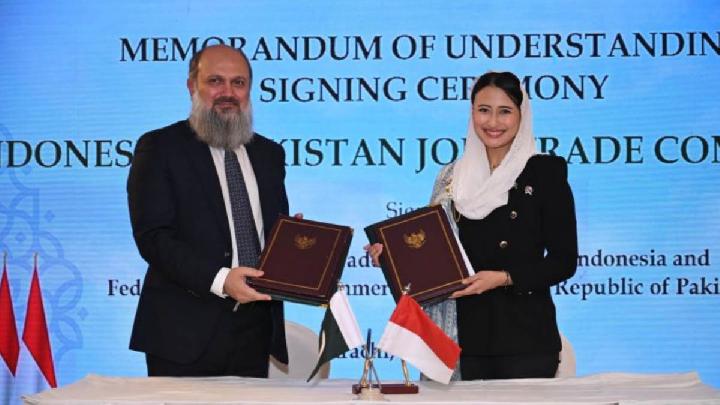
The expansion of the RI-Pakistan cooperation towards CEPA will strengthen more comprehensive and sustainable trade, services, and investment.
Plans to Resurrect the Repressive New Order System
1 hari lalu

President prabowo wants the 1945 Constitution restored to its original text.
Prabowo Pledges Bigger Bonuses for Asian Games Athletes
3 hari lalu

The Asian Games will be held in Japan in September 2026.
Indonesia Grants Rp1bn Bonus to SEA Games Gold Medalists
3 hari lalu
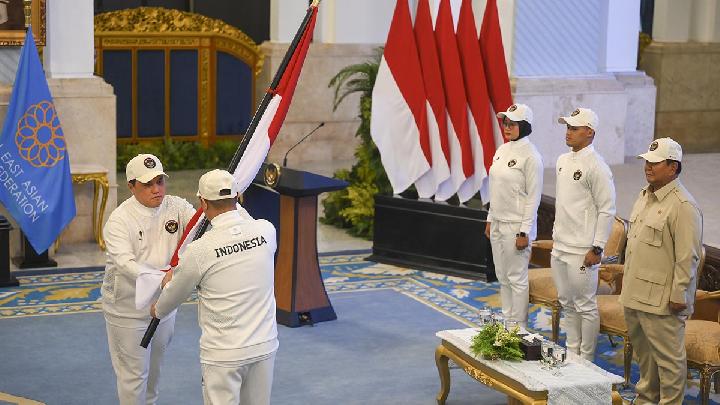
Minister of Youth and Sports Erick Thohir mentioned that the medal count at this SEA Games exceeded the initial target of 80 gold medals.
Today's Top 3 News: Doraemon Bids Farewell to Indonesian TV Channel
3 hari lalu

Here is the list of the top 3 news on Tempo English today.
Fading Press Freedom
3 hari lalu
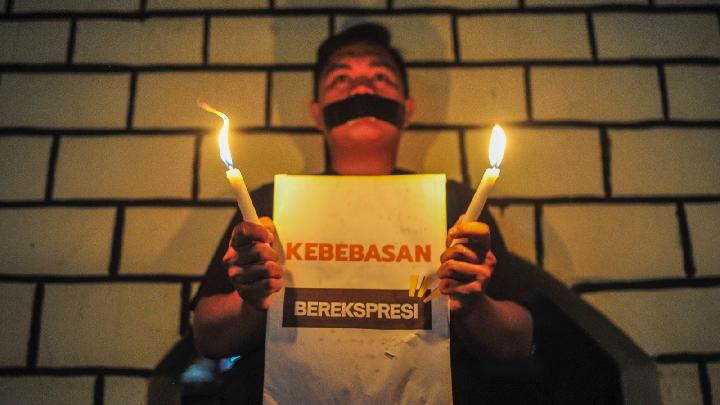
Prabowo Subianto's government shows an allergy to media criticism. Press independence is increasingly under threat.
Prabowo Awards Main Service Star to Agriculture Minister Amran Sulaiman
4 hari lalu
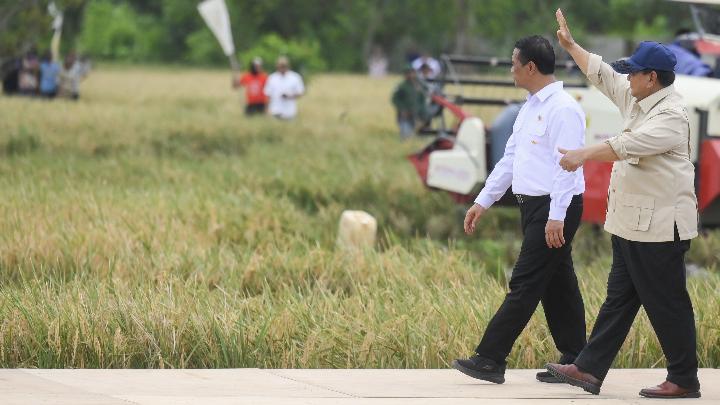
Minister Amran is considered instrumental in achieving rice self-sufficiency last year.