TEMPO.CO, Jakarta - A post claiming that the Superflu virus, or influenza A9H2 subclade K virus, was more severe than Covid-19 circulated on TikTok [archive] and Facebook on January 2, 2025.
The post showed an image of two people wearing white hazmat suits. The post's caption read, “Baru sehari 2026, virus Super Flu sudah masuk Indonesia, lebih parah daripada Covid-19” (In just one day in 2026, the Superflu virus has entered Indonesia, more severe than Covid-19).

As of this writing, the content has been viewed 590,000 times, liked 2,509 times, and commented on by 1,422 users. But is it true that the Superflu virus is more severe and dangerous than the Covid-19 virus?
FACT CHECK
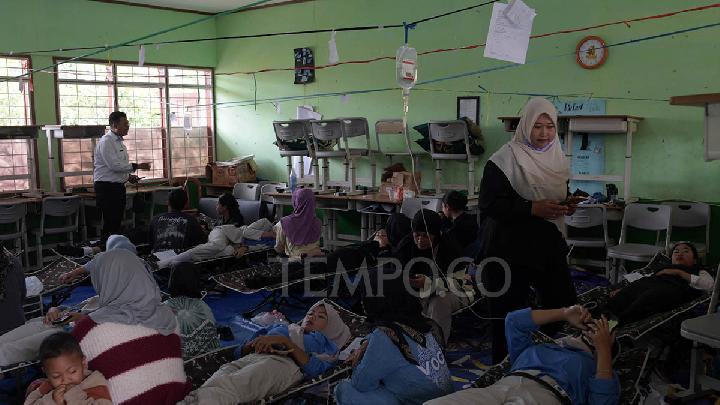
Tempo verified the content by contacting specialist doctors and tracing credible news sources. The results showed that the symptoms experienced by positive cases in Indonesia were relatively mild, unlike the symptoms experienced during the Covid-19 pandemic.
Dr. Arif Luqman Hakim, Sp.PD, an Internal Medicine Specialist at the Surabaya Ministry of Health Hospital, explained that Superflu refers to the seasonal influenza virus type A with the H3N2 subtype, also known as the seasonal influenza virus.
"Superflu is not a new threat that can be compared to the Covid-19 virus," he told Tempo on Thursday, January 8, 2026.
The name "superflu" is not related to the severity of the disease it causes in patients. The label "super" refers to the rate of transmission, which is considered more aggressive than usual. This rapid spread, he said, was due to extreme weather changes.
He urged the public not to be fooled by rumors that this virus was more severe than the COVID-19 pandemic.
In Indonesia, the virus was first detected in mid-August 2025. Based on Whole Genome Sequencing (WGS) analysis of hundreds of samples through December 2025, 62 positive cases were found, the majority of which affected vulnerable groups such as women and children. All Superflu patients were in stable clinical condition with mild symptoms.
Unlike Superflu, those infected with the SARS-CoV-2 virus that causes COVID-19 can experience varying degrees of severity, even death. According to Our World In Data, as of December 21, 2025, more than 7 million people have died from COVID-19.
Tempo reports that the World Health Organization (WHO) explains that this variant is the result of gradual changes or genetic drift, which is common in seasonal influenza viruses. This virus continues to replicate and adapt within the human population through mutations in the hemagglutinin (HA) gene, a key target of the immune system.
Before being detected in Indonesia, this variant had spread in several Asian countries since July 2025, including China, Singapore, Thailand, Japan, and South Korea. Indonesia's position as a transit hub in Southeast Asia accelerated exposure to the K subclade, which entered through international travel.
Data from the WHO Global Influenza Update as of December 28, 2025, recorded a much greater surge in influenza cases in the northern hemisphere than in the southern hemisphere. In the northern region, the increase in cases exceeded 30 percent in Central America, the Caribbean, North Africa, Europe, and most of Asia.
Meanwhile, Southeast Asia and Africa reported an increase in cases above 10 percent. Influenza A(H3N2) is the most dominant variant in almost all zones, except in Tropical South America, where more cases of influenza type A(H1N1)pdm09 have been reported.
To reduce the risk of exposure to superflu, Dr. Arif Luqman Hakim urged the public to pay attention to the transmission process, which is spread through droplets when an infected person coughs or sneezes. In addition, superflu is transmitted through direct contact with objects contaminated with bodily fluids.
Arif emphasized the need for the public to practice Clean and Healthy Living Behaviors (PHBS) to break the chain of transmission, especially by regularly washing hands after activities in public spaces. Wearing masks also remains crucial, for both healthy and sick people, to protect each other. As additional protection, Arif recommends annual influenza vaccination so the immune system recognizes circulating virus subtypes.
CONCLUSION
Based on Tempo's research, the claim that the Superflu virus is more severe and dangerous than the Covid-19 virus is false.
TEMPO FACT CHECK TEAM
**Do you have information or claims that you want to have fact-checked? Contact our ChatBot. You can also send criticism, objections, or feedback for this Fact-Checking article via email to [email protected].