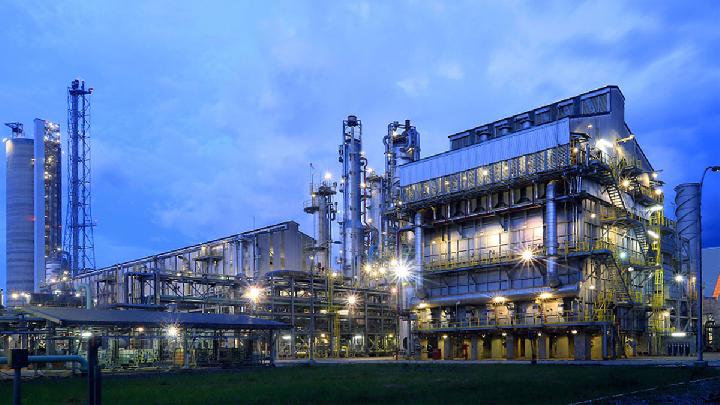
TEMPO.CO, Jakarta - State-owned fertilizer producer PT Pupuk Indonesia (Persero) has assured that Indonesia’s fertilizer supply remains secure despite escalating tensions between Iran and Israel.
Pupuk Indonesia Corporate Secretary Yehezkiel Adiperwira said the company has sufficient production capacity and raw material reserves to ensure a stable fertilizer supply for farmers.
“Amid ongoing geopolitical dynamics, we want to assure that the national fertilizer supply remains secure so farmers can continue planting without worrying about availability,” Yehezkiel said, as quoted by Antara on Saturday, March 7, 2026.
He said the Pupuk Indonesia Group currently has a production capacity of 14.5 million tons of fertilizer annually, covering various types of fertilizers. Its urea production capacity alone is sufficient to meet Indonesia’s entire domestic demand, he added.
Indonesia’s urea production also maintains a high level of self-sufficiency because its main raw material (natural gas) is supplied domestically, with both supply and prices regulated by the government.
As a result, Yehezkiel said, the escalation of tensions around the Strait of Hormuz has not directly affected the country’s urea fertilizer supply.
“Pupuk Indonesia is the largest urea producer across the Asia-Pacific, Middle East, and North Africa regions. With such strong production capacity, we are able to maintain an optimal fertilizer supply for Indonesian farmers,” he said.
Beyond production capacity, the company is also strengthening supply chain resilience by diversifying sources of strategic fertilizer raw materials, some of which are imported.
Certain key inputs are not naturally available in Indonesia, including phosphate (P) and potassium (K), which are essential components in NPK fertilizer production.
Yehezkiel said phosphate supplies are sourced from North African countries such as Morocco, Tunisia, and Algeria, while potassium is imported from Canada and Laos, locations outside the Middle East conflict zone and therefore less exposed to potential supply disruptions.
Other materials that could potentially be affected by the Iran–Israel conflict include sulfur (S), which Pupuk Indonesia currently imports from the United Arab Emirates, Qatar, and Kuwait. However, the company also sources sulfur from other countries, including Canada, to mitigate supply risks.
In addition to diversifying suppliers, Pupuk Indonesia said it is strengthening its raw material stock management, ensuring that reserves of phosphate, potassium, and sulfur remain at sufficient levels to support production.
The company said these measures are also intended to anticipate potential increases in logistics costs linked to rising global oil prices.
“With strong production capacity, diversified raw material sources, and reliable stock management, Pupuk Indonesia remains optimistic about maintaining the stability of the national fertilizer supply,” Yehezkiel said.
Read: Indonesia Clears First 2,280 Tons of Rice for Export to Saudi Arabia
Click here to get the latest news updates from Tempo on Google New
Plans to Build Seven Fertilizer Production Facilities to Boost Capacity
43 hari lalu

The government plans to build seven fertilizer production units, aiming to keep urea output at 9.4 million tons.
Indonesia and Algeria Partner to Boost Fertilizer Output
44 hari lalu
Wamentan Sudaryono stated that the phosphate cooperation with Algeria is a concrete step to strengthen the national fertilizer industry's upstream sector.
Bahlil's Fingerprints on the Fakfak Fertilizer Project
47 hari lalu
The relocation of a fertilizer industrial zone in Papua has run into serious trouble.
Pupuk Indonesia Changes Shareholding Structure, State Holds Full Control
30 Maret 2025

Pupuk Indonesia asserts that this change does not have a material impact on the company's operations, financial conditions, or business continuity.
PT Pupuk Indonesia Spends Rp116 Trillion to Revitalize and Build Factories
25 Maret 2025

The President Director of PT Pupuk Indonesia, Rahmad Pribadi, revealed the company's plan to revitalize factories with a total budget reaching Rp 116 trillion.