TEMPO.CO, Jakarta - Online-lending platforms aggressively target young people who have no stable income. Oversight is failing.
CONCERNS are growing about the possibility of a financial emergency affecting young people because of the increasing temptation of online loans. This is a result of the extensive leeway digital lending companies have in distributing loans through remarkably easy procedures that frequently violate regulations.
The Financial Services Authority (OJK) revealed a startling fact that non-performing online loans are overwhelmingly dominated by Generation Z. As of the first semester of 2025, individual loans with debtors under 19 years old that were non-performing for more than 90 days surged by 763 percent year-on-year. This figure sets a record in the history of the national financial technology or fintech lending industry.
Over the last few years, young people have come to dominate the online lending industry. This is apparent from the number of active loan recipient accounts held by people under 19 years old, which stood at 21,774 entities in June 2025. The year before, there were only 2,521 entities.
The OJK might argue that the rate of non-performing loans among Gen Z is rising due to poor financial literacy. However, they cannot be entirely blamed. The rocketing number of non-performing loans in this segment is also driven by aggressive offers from online loan platforms.
This adverse condition would not occur if the OJK prevented digital lending platforms from offering loans recklessly. This teenage age group can be called “victims” who are targeted by online lending operators. It is clear that the majority of children under 19 years old are not yet financially secure. Their jobs and income are uncertain. Yet, their loan applications are easily approved.
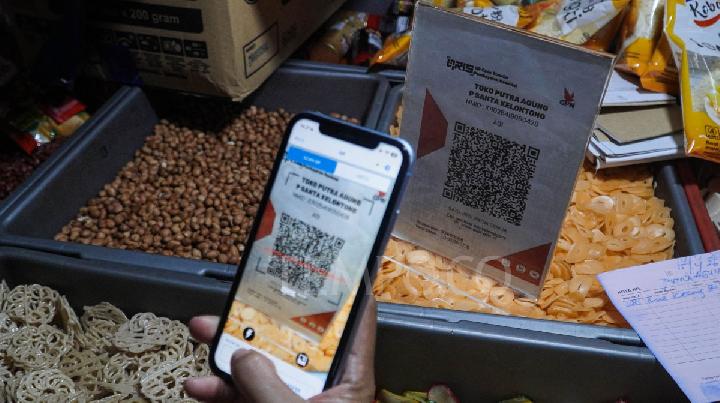
Given the ease and minimal requirements for applying for credit—an identity card, a mobile phone number and a photograph—it is fair to question whether these platforms apply the principle of prudence long prioritized by the financial sector. The fact is that these platforms arbitrarily hand out loans to people with limited ability to repay them.
Therefore, it is no surprise that there was an increase in outstanding non-performing loans in the under-19 age group by 96 percent, from Rp1.75 billion in June 2024 to Rp3.43 billion in June 2025. The online lending industry recorded outstanding financing of Rp90.99 trillion, an increase of 22.16 percent as of September 2025. Of that figure, only one-third was disbursed to productive sectors. Meanwhile, outstanding loans from illegal online lending providers are estimated to reach Rp200 trillion.
Online loans, popularly known as fintech peer-to-peer lending, have become an option for people struggling to access bank financing. In its development, this micro-loan business has become extremely lucrative due to exorbitant interest rates. Illegal service providers even charge interest of 4 percent, and sometimes up to 10 percent.
Another form of digital lending is the service for purchasing products with a buy now, pay later concept. Lending providers are aggressively offering this service on various e-commerce platforms with the lure of huge discounts. It completely makes no sense that cash or upfront purchases are not appreciated, instead, consumers are encouraged to take on debt through the pay later facility.
The OJK must not allow these loan shark practices to continue disrupting the people’s economy. Firm and bold action is vital to eradicate online lending companies that do not abide by the regulations. Without this, the list of digital loan shark victims will only grow longer.