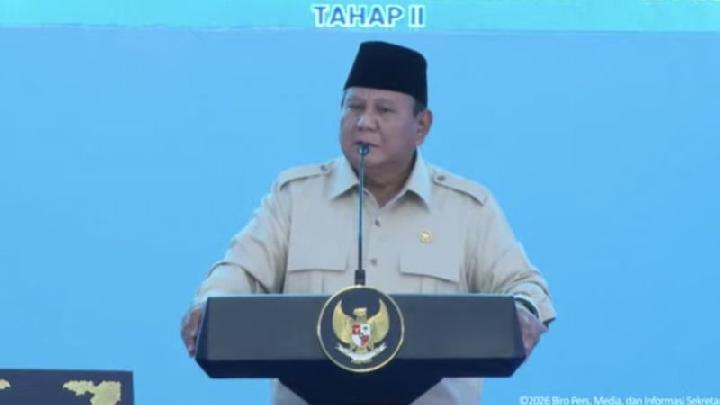
TEMPO.CO, Jakarta - Prabowo Subianto makes his concern about Indonesia's doctor shortage known during the UK-Indonesia Education Roundtable at Lancaster House, London, on January 20, 2026. During the forum, he floats the idea of UK universities opening campus branches in Indonesia.
Prabowo even mentioned his ambitious goal of bringing ten international-standard universities to Indonesia—an English-forward, STEM-focused idea.
If this plan materializes, the Indonesian higher education landscape could be seeing a drastic change. But how realistic is this proposal? And what are the implications for local universities?
Not A New Idea
In fact, foreign universities have entered Indonesia since former President Joko Widodo sat in office. A few examples: King's College London in Singhasari, Malang, and Deakin Lancaster University in Bandung.
What makes Prabowo's proposal different is the speed and extent of this scheme. Ten new campuses signal a much more aggressive approach than before, a shortcut to close the gap in the fields of science and technology.
"We want to pursue and have the highest level of education, on par with the world's best," said Prabowo in a written statement on January 21, 2026.
Another pressing issue is the shortage of doctors. The gap of about 9,000 medical graduates could not catch up with the demand of around 140,000 medical personnel.
The government plans to establish universities focusing on medicine, dentistry, and pharmacy, as well as science and technology. The best students will be selected and fully funded, including in intensive English language training equivalent to the IELTS standard, and potentially in collaboration with the British Council.
What Are the Benefits of Foreign Campuses Entering Indonesia?
From an academic perspective, this collaboration will bring benefits if designed earnestly as a knowledge transfer practice.
Some of these advantages include research collaboration, lecturer exchange programs, and affiliated institutions' potential, said the Coordinator of the Indonesian Caucus for Academic Freedom (KIKA), Satria Unggul Wicaksana. In an ideal scheme, foreign campuses will not only open branches, but build a joint research ecosystem and strengthen local lecturer capacity.
Indonesian students can also access international standard education without having to go abroad.
From an economic standpoint, foreign campuses in Indonesia open the door for foreign exchange potential. A significant amount of money flows out of Indonesia thus far due to students opting to study overseas. But if the quality of domestic campuses is on par, the cost of education can be more affordable and money will circulate within the country.
What Are the Risks?
Education observer Doni Koesuma warns that the entry of foreign campuses could intensify the competitive nature between national higher education institutions. Local campuses—both public and private—will directly compete with institutions with global reputations, international networks, and strong market appeal.
Member of the House Commission X, Furtasan Ali Yusuf, believes that the impact may not immediately be widespread since foreign campuses have their own resource limitations. But he proposes a clear boundary: foreign universities are advised to avoid opening undergraduate programs in Indonesia.
Undergraduate programs, according to him, must remain the domain of national universities. Foreign campuses should focus more on master's and doctoral programs to strengthen research and knowledge development, rather than competing for new students.
Satria shares the sentiment, emphasizing a clear gap in starting point. Many institutions across Indonesian regions are struggling with limited funds, facilities, and the quality of faculty. If they have to compete directly with world-class foreign universities, they are fighting a losing battle.
The subsequent impact could be serious: foreign universities attract the best students and outstanding lecturers, while local universities lose even more resources.
A Global Issue
The entry of foreign universities also relates to the liberalization of the global services sector. Higher education is included in the General Agreement on Trade in Services (GATS), which opens up cross-border trade in services.
According to Satria, this can take several forms: the opening of foreign campus branches, cross-border mobility of lecturers, and the adoption of international curricula. This phenomenon does not only come from the UK, but also from Australia and other countries.
The problem is, if liberalization runs unchecked, the impact could erode national education sovereignty. Instead of knowledge transfer, Indonesia could potentially lose control over the direction, governance, and priorities of its own higher education development.
Read: Prabowo Invites UK Universities to Open Campuses in Indonesia
Click here to get the latest news updates from Tempo on Google News