
Mining expansion and land conversion can lead to erosion of living spaces and cultural identity of indigenous communities.
ADVERSE impacts from reckless mining and agricultural activities go beyond pollution, environmental destruction and health risks. There is a silent destruction: the loss of indigenous cultural identity.
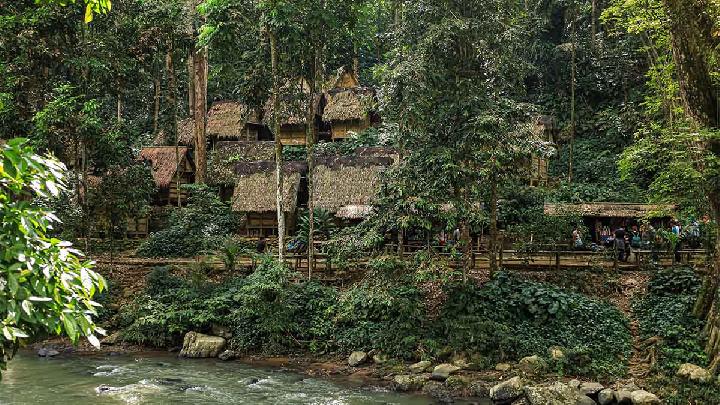
This was illustrated in the latest research by Perkumpulan Prakarsa in collaboration with the Bangka Belitung branch of the Indonesian Forum for the Environment (Walhi) and Responsibank Indonesia. The study revealed that living spaces of around 300 Lom tribe members or the Mapur indigenous community in Mapur village, Bangka Regency, Bangka Belitung Islands, continues to shrink due to tin mining and oil palm plantation expansions.
Tin mining actually has been carried out across Bangka Belitung for centuries. However, pressure on indigenous peoples sharply rose after the government allowed wider room for small-scale mining in 2001. Now almost 80 percent of the Mapur village’s 79.69 square kilometers has become mine and plantation fields. Walhi said throughout the period 2014-2020, around one million hectares out of 1.6 million hectares of Bangka Belitung’s land were converted into mining concession areas, and 170,000 hectares into oil palm plantations.
For indigenous communities, forests, mountains, rivers, and seas are not just sources of livelihood, but also part of their collective identity. Knowledge regarding nature, traditions, values, and cultural practices were handed down through interactions with nature. When indigenous territories shrink, their knowledge, collective memory, and way of life that have been passed down through generations are also at risk of disappearing.
Threats to indigenous communities are not just environmental damage, but also the issue of justice. People who enjoy the least economic benefits from extractive projects are precisely the ones who stand to lose the most: loss of land, livelihoods, and the right to determine the future of their own land.
The Indigenous Peoples Alliance of the Archipelago (AMAN) recorded 140 communities that were affected by concession permits and government projects during the 2014-2024 period. During this time, around 2.8 million hectares of customary forests were transferred to the government or corporations. The Dayak people in Kalimantan, indigenous communities in the Nusantara Capital City region as well as four indigenous communities in Merauke, South Papua, are facing similar threats due to mining and agricultural expansions, and large-scale food projects.
This situation is exacerbated by the absence of laws that specifically protect indigenous peoples. The mechanism of recognition in various regulations often clash with stronger investment interests. Therefore, the House of Representatives (DPR) need to immediately pass the Indigenous Community Bill.
The problem is not just weak legal protection. The state still too often considers indigenous territories as economic assets that can be easily converted into mines, plantation, or industrial zones. For indigenous people, however, these areas are living spaces that bring together economic, social, cultural, and spiritual functions. When state policies only count investment value, indigenous peoples are easily displaced from the land that sustains them.
It is high time the government abandoned the development paradigm that views customary land solely as economic assets. Otherwise, at risks of disappearing are not just the natural landscape, but also knowledge, identity, and cultural heritage of indigenous peoples.
Contradictive Customary Forests Protection
49 hari lalu

The House of Representatives and the government suddenly take an interest in the Indigenous Peoples Bill. Meanwhile, land grabs continue unabated.
Why the Indigenous Peoples Bill Must Be Passed Immediately
3 Februari 2026
For 16 years, the Indigenous Peoples Bill (Rancangan Undang Undang Masyarakat Adat or RUU MA) has stalled in the Indonesian parliament.
Protesters Breach COP30 Venue, Confront Security in Heated Clashes
12 November 2025
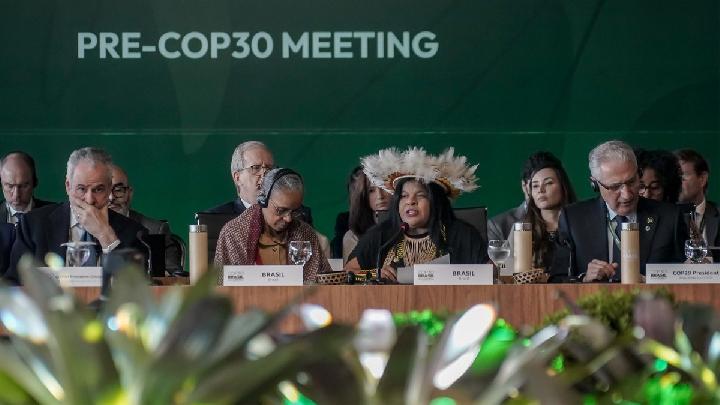
On Tuesday night, dozens of indigenous protesters stormed the COP30 climate conference venue in Brazil, demanding action on forest protection.
Govt Reprimands Jakarta Hospital for Refusing Indigenous Patient with No ID
6 November 2025
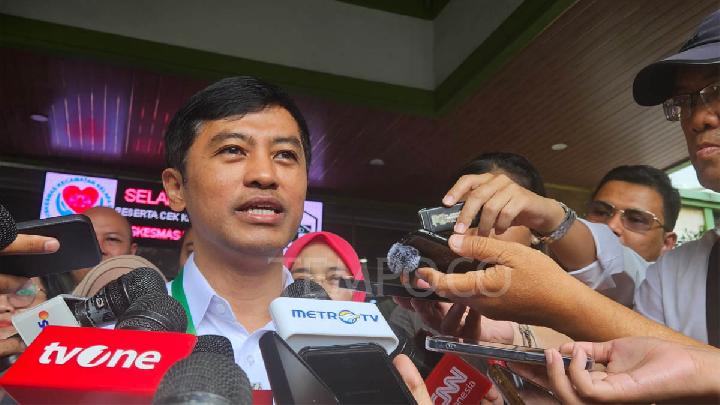
Vice Minister of Health emphasizes that refusal of healthcare services, especially in emergencies, is a violation of citizens' basic rights
AMAN: Toba Pulp Lestari Workers Assault Indigenous Residents Guarding Ancestral Land
22 September 2025
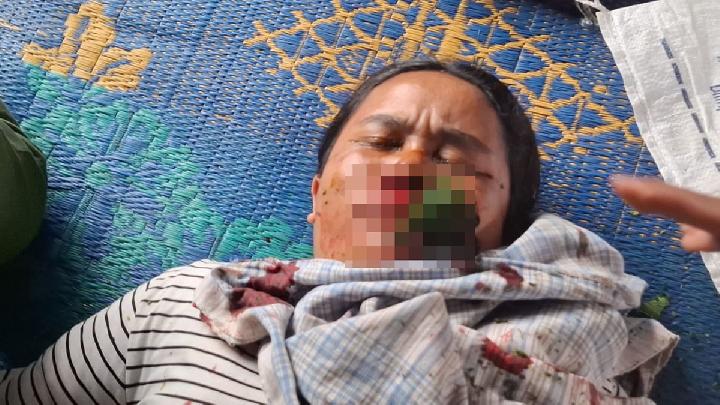
Hundreds of workers from the tycoon-owned Toba Pulp Lestari reportedly raided the indigenous community, leaving several people injured.
UN Special Rapporteur Engages with Indigenous Communities in Indonesia's NTT
11 Juli 2025

The arrival of Albert Kwokwo Barume is part of an academic visit, defined as an unofficial visit for the UN Special Rapporteur to Indonesia.
Special UN Rapporteur Visits Papua, Hears Indigenous Concerns
8 Juli 2025
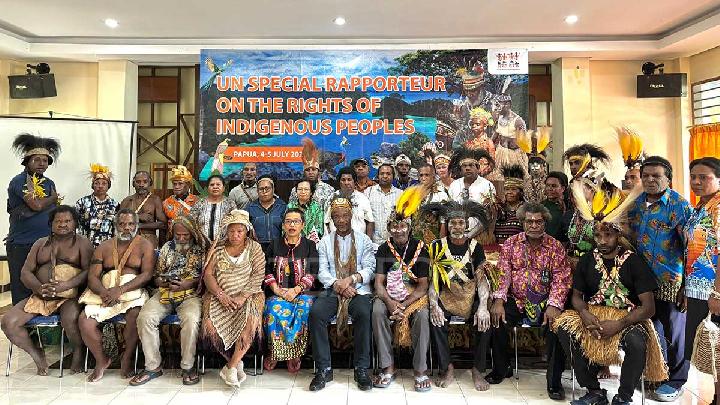
UN Special Rapporteur Albert Kwokwo Barume's visit to Papua was categorized as an informal or "academic visit".
The Customary Forest Recognition Sweetener
2 Mei 2025

Forestry Minister establishes a task force for the acceleration of customary forest designation. It is just a gimmick without any political sincerity.
Celios: Central Govt's Dominant Role in Food Estate PSN Violates Papua's Special Autonomy
23 Desember 2024

Overall, the Merauke food estate area consists of five clusters and is spread across 13 districts.
Prabowo's Future Administration Urged to Evaluate Security Approach in Papua
19 Oktober 2024

Based on Amnesty International Indonesia's observation, at least 132 unlawful killings in Papua occurred from February 2018 to August 2024.