TEMPO.CO, Jakarta - The Islamic Revolutionary Guard Corps (IRGC) warned on Tuesday that neighboring countries will be deemed "hostile" if their territories are utilized to launch attacks against Iran. This statement was issued as a U.S. strike group moves toward the Middle East with orders to target Iranian interests.
"Neighboring countries are our friends, but if their soil, airspace or waters are used against Iran, they will be considered hostile," stated Mohammad Akbarzadeh, the political deputy commander of the IRGC Navy, as quoted by the government-affiliated Fars news agency and cited by Al Arabiya.
He added that this specific message has already been conveyed to regional governments.
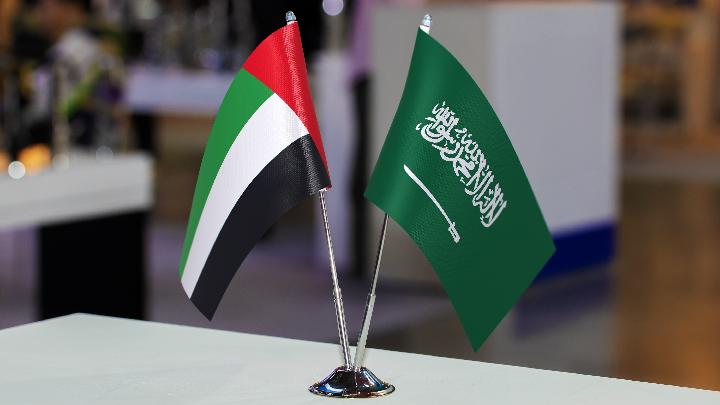
Several neighboring nations, including the United Arab Emirates (UAE) and Saudi Arabia, have officially stated they will not allow their territory to be used for strikes against Iran.
However, at least three U.S. Air Force planes were transferred from Germany to Middle Eastern countries, including Kuwait and Qatar, over the past two days, according to Flightradar24 data reported by Antara on Monday.
According to the flight tracking service, as reported by Sputnik, a Boeing KC-135R Stratotanker landed in Qatar on Sunday around 18:23 GMT (Monday, 01:23 Jakarta time). The aircraft likely departed from the U.S. Air Force Ramstein Air Base in Germany.
Additionally, on Saturday, around 20:40 GMT (Sunday 03:40 Jakarta time), a Boeing C-17A Globemaster III military transport plane landed in Kuwait after departing from Trier, Germany.
Lastly, on Saturday around 21:54 GMT (Sunday, 04:52 Jakarta time), another C-17A aircraft, which departed from the U.S. Air Force Spangdahlem Air Base in Germany, disappeared from radar in the southern Kuwaiti region.
Furthermore, based on Flightradar24 data, the U.S. also deployed a Lockheed Martin C-130J Hercules military transport plane from Bahrain to central Kuwait. Additionally, a U.S. KC-135R tanker plane landed in Qatar at approximately 01:54 GMT (08:54 Jakarta time) on January 25.
Previously, the IRGC declined to provide a definitive answer on whether military intervention against Iran had been ruled out, stating only that they could not guarantee future developments.
On January 21, the Wall Street Journal reported that the U.S. deployed F-15E fighter jets and the aircraft carrier USS Abraham Lincoln to the Middle East. Reports also indicated that additional air defense systems, including Patriot and THAAD missile defense batteries, would be stationed in the region.
Ready for War
The United States, which maintains several bases in the Middle East, has not ruled out military intervention against Iran following its crackdown on anti-government protests. President Donald Trump stated on January 22 that he dispatched the USS Abraham Lincoln to the area "just in case."
Akbarzadeh asserted that while Iran does not seek war, it is "fully prepared," warning that Tehran "not retreat even a millimeter" should a conflict erupt.
He also appeared to threaten the closure of the Strait of Hormuz, a vital waterway through which roughly 20% of the global oil supply passes, a threat Iran has issued repeatedly in the past but has never executed.
"Iran has real-time intelligence over the Strait of Hormuz, above and below the surface, and the security of this strategic passage depends on Tehran’s decisions," Akbarzadeh said. "We do not want the world economy to suffer, but the Americans and their supporters will not benefit from a war they start."
Since Iran’s crackdown on protests earlier this month, accompanied by a total internet blackout, Trump has offered mixed signals regarding intervention, which some opponents of the clerical leadership view as the only path to change, despite widespread opposition to interfering in another nation's internal affairs.
The New York Times reported that Trump has received several intelligence briefings indicating that the Iranian government's grip on power is at its weakest since the 1979 revolution.
Human rights groups have characterized the crackdown as the deadliest repression of protests in Iran, warning that accurately tallying casualties has been complicated by a nearly three-week internet shutdown designed to conceal the extent of the suppression.
In its latest count, the U.S.-based and funded Human Rights Activists News Agency (HRANA) confirmed that 6,126 people have died, including 5,777 demonstrators, 86 minors, 214 security forces, and 49 civilians.
However, the group, which maintains a broad network of sources within Iran and has tracked the protests daily, added that they are still investigating an additional 17,091 potential deaths.
At least 41,880 people have been arrested, the agency stated.
Read: Trump Claims Iran Wants Deal as US Deploys Aircraft Carrier to Middle East
Click here to get the latest news updates from Tempo on Google News