December 24, 2025 | 05:48 pm
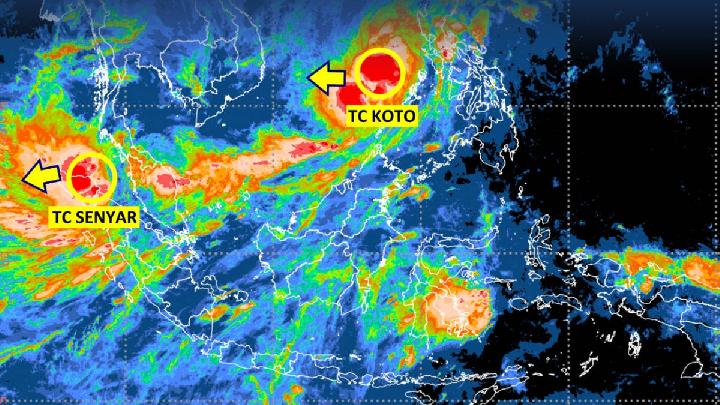
TEMPO.CO, Jakarta - Indonesia’s Meteorology, Climatology, and Geophysics Agency (BMKG) has warned that the potential for significant tropical cyclones affecting the country in 2026 remains.
BMKG Deputy for Meteorology Guswanto said tropical cyclone activity in 2026 is expected to follow two main seasonal patterns based on hemispheric conditions.
In the Southern Hemisphere, the potential for cyclone formation typically occurs from January to April, while in the Northern Hemisphere it generally emerges between June and December.
“Based on these patterns, the possibility of tropical cyclones affecting Indonesia in 2026 remains,” Guswanto said during the online Climate Outlook 2026 event on Tuesday, December 23, 2025.
However, he said BMKG is unable to predict the exact number of cyclones that may develop. “We can observe the potential, but we cannot specify the numbers, whether there will be two or three,” he said.
Despite the uncertainty, Guswanto said the likelihood of more than one cyclone event remains. He pointed to past experiences, including Tropical Cyclone Seroja, which affected parts of Indonesia in April in previous years.
According to Guswanto, the impact of tropical cyclones depends largely on their intensity and proximity to Indonesian territory. He cited the recent formation of Tropical Cyclone Grant as an example.
“Tropical Cyclone Grant originated from a low-pressure system known as 93S. However, it is located around 1,000 kilometers southwest of the Sunda Strait, so its main impact is increased wave heights in the Indian Ocean,” he said.
Climate and Cyclone Forecasts Differ
Guswanto also highlighted the key differences between climate forecasting and tropical cyclone prediction. Climate forecasts are conducted over longer time frames, while tropical cyclones are short-lived phenomena that can typically be predicted only within three days to one week.
“Although their duration is brief, cyclone development can be detected early, starting from a low-pressure area, evolving into a tropical disturbance, and eventually forming a tropical cyclone,” said Guswanto, who also serves as BMKG’s secretary general.
He added that tropical cyclones generally last less than 10 days, making them unsuitable for seasonal or annual forecasting. As a result, he said, cyclone activity cannot be predicted on a long-term scale in the same way as broader climate trends.
Read: Tropical Cyclone Grant Impacts Western Indonesia
Click here to get the latest news updates from Tempo on Google News
BMKG: Tropical Cyclone 93S Intensifies While Drifting Away from Indonesia
1 hari lalu

BMKG predicts Tropical Cyclone 93S is moving west away from Indonesia, with winds expected to reach 60 knots (110 km/h) by Wednesday.
BMKG: Light Rain to Continue in Greater Jakarta Area
2 hari lalu

Forecast for today's weather in the Jakarta area, Monday, December 22, 2025, according to the BMKG.
Cyclone 93S Brings Rain to Greater Jakarta Over the Past Two Days
5 hari lalu
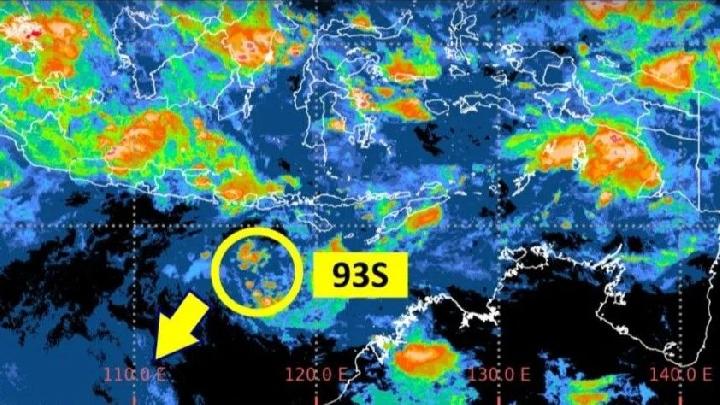
New data and analysis from BMKG reveal that Tropical Cyclone 93S is currently located in the southern region of West Java. Which areas are affected?
BMKG Warns of Up to 4-Meter Waves in Several Indonesian Waters
6 hari lalu

In addition to high waves in the waters, Tropical Cyclone Bakung and the tropical cyclone seeds 93S and 95S could also cause heavy rains.
Indonesia's BMKG Warns of Three Cyclones Surrounding These Areas
8 hari lalu
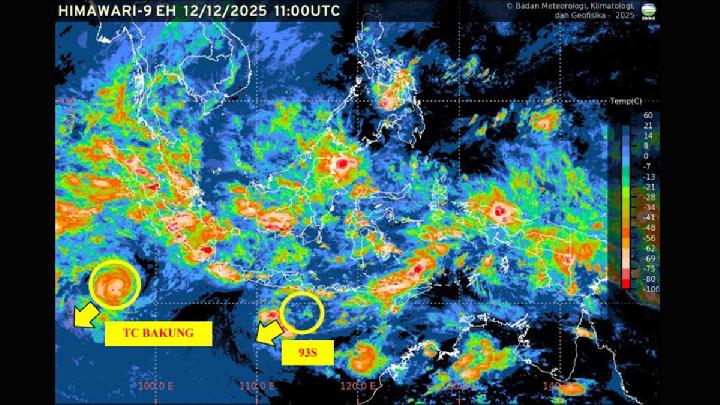
The head of BMKG, Teuku Faisal Fathani, stated that three tropical cyclones are surrounding Indonesia, namely Cyclone Bakung, Cyclone 93S, and Cyclone 95S.
Cyclone 91S Near Sumatra to Bring Heavy Rain, BRIN Warns
13 hari lalu
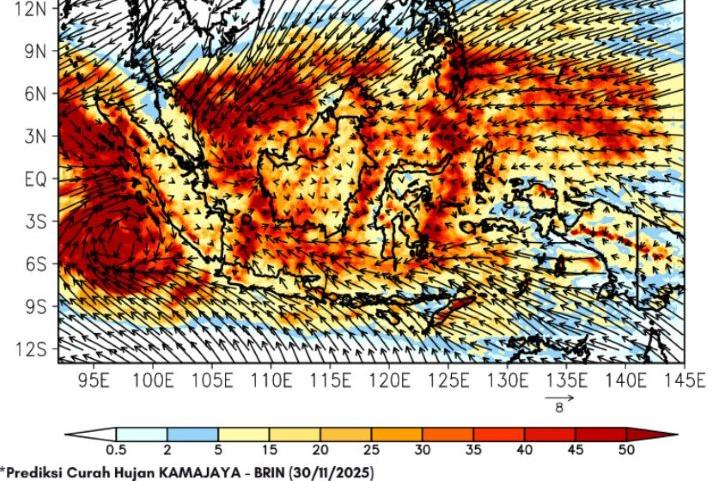
BRIN predicts heavy rain on the west coast of Sumatra due to Cyclone 91S. The potential for this cyclone to develop into a storm is still low.
BMKG Reports Potential Cyclone 91S in Southwest Indian Ocean, Off the Coast of Lampung
15 hari lalu
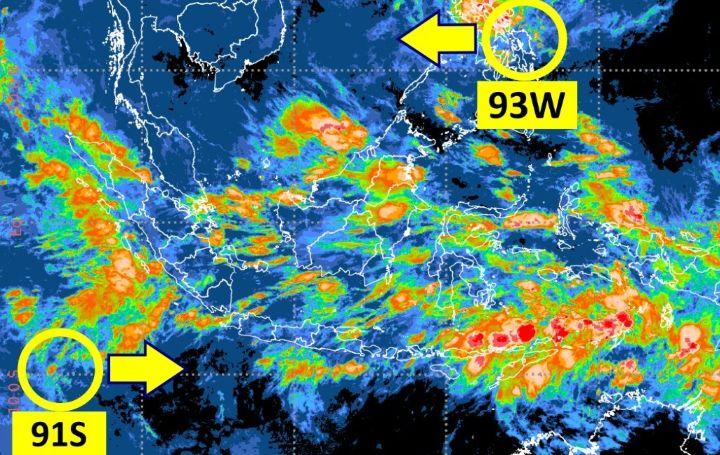
The BMKG mentions the circulation of potential cyclone 91S in the southwest Indian Ocean off the coast of Lampung. It may cause moderate to heavy rain and high waves.
BMKG: Two Cyclone Seeds 91S and 93W Unlikely to Develop but Still Impact Indonesia's Weather
16 hari lalu
The wind speed is predicted to decrease, but cyclone seeds 91S and 93W still have the potential to affect the weather and sea wave movements.
Cyclone Senyar: Six Fishermen Dead, More Still Missing in Riau
17 hari lalu

The extreme weather caused by tropical cyclone Senyar at the end of last November is suspected to have claimed many lives at sea.
Sri Lanka: Cyclone Ditwah Kills Over 600
18 hari lalu
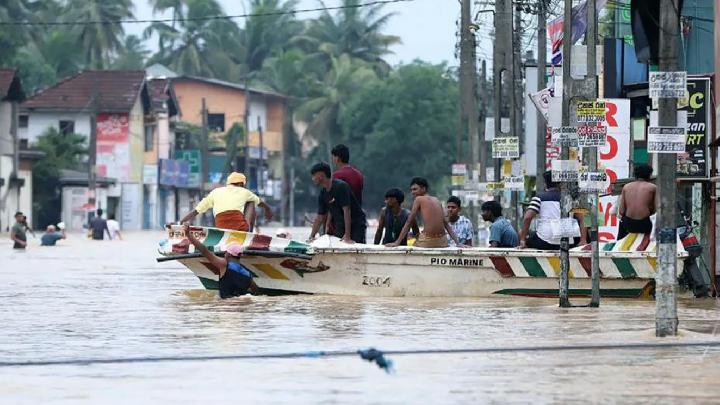
The cyclone caused landslides and floods that have killed hundreds of people, with hundreds more still missing.