November 12, 2025 | 11:08 pm

TEMPO.CO, Jakarta - Every time the Indonesian National Football Team shows a flash of brilliance, the perennial question returns: When will the country qualify for the FIFA World Cup? While common answers often cite public support, regeneration, or foreign coaching, LaLiga's Football Director, Juan Florit Zapata, argues the fundamental problem lies in the system.
"Indonesia already has the passion and football culture. Not all countries have it. But passion alone is not enough. You need a strong and sustainable competition system at all levels," Florit told Tempo in an interview on Wednesday, November 5, 2025.
Florit identified five main factors crucial for building a solid football ecosystem: football culture, infrastructure, training methodology, playing philosophy, and competition system.
"Competitions that are structured and consistent are the most crucial," he stressed.
Matches as Part of Training
Florit highlighted the Spanish model as an example, where young players begin participating in official competitions from the age of seven or eight.
"A child in Spain can play around 500 matches before they reach the age of 18 or 19," he said. "We have always believed that matches are part of the training."
LaLiga adheres to the principle that training and matches are inseparable. "Training hones technical skills, but matches test decision-making and mentality. That's where players become professionals," he added.
Difficult, But Not Impossible
When asked if Indonesia could qualify for the World Cup without a strong competition system, Florit answered cautiously. "Difficult, but not impossible," he admitted.
He qualified this by stating that establishing a sustainable competitive structure, from U-10, U-12, to U-19, would "greatly help pave the way there."
This perspective suggests that the national team's success cannot rely solely on natural talent or short-term projects like training centers or player naturalization. Instead, a long-term competitive ecosystem is needed to ensure every young player receives adequate, structured playing time from an early age.
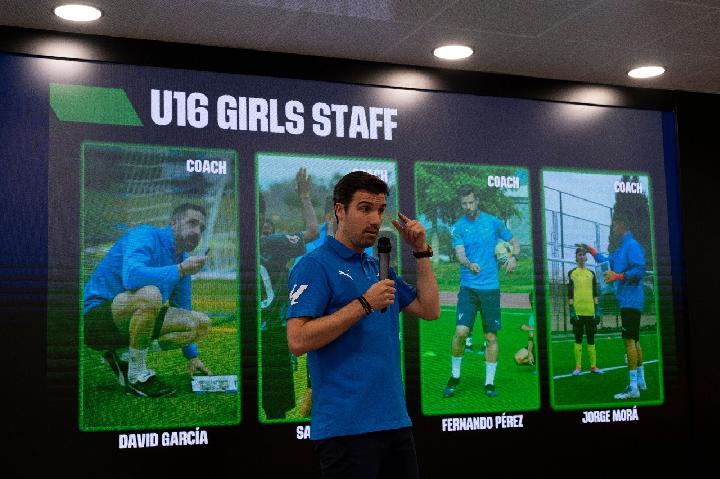 LaLiga's Football Director Juan Florit Zapata. Doc. LaLiga.
Two Immediate Priorities
If LaLiga were in Indonesia's position, Florit said two main priorities would be implemented immediately. First, building a structured youth competition system that aligns with the local context. Second, enhancing the capacity of local coaches and professionals, covering head coaches, analysts, talent scouts, and physical trainers.
According to Florit, without competent local professionals and a structured competition, all external investment would be in vain. "LaLiga may be able to assist in the initial stages by sharing expertise and methodology," he noted. "But in the long run, the changes must be made by local professionals with adequate knowledge and tools."
Indonesia, with its large population and intense football fanaticism, possesses a unique asset absent in many other ASEAN countries. However, without a structured competition and comprehensive development, this potential remains untapped.
Florit believes that the reform of Indonesian football must begin with the simplest yet most important step: giving children more opportunities to compete.
"A child who plays 500 matches before adulthood will always be more prepared than a child who only plays 50 matches," he concluded.
LaLiga proves that a healthy competition system not only produces great players but also ensures the financial stability and balance of the entire football industry. This foundation allows Spain, currently a global football powerhouse, to remain one of the world's best exporters of talent.
Indonesia has not reached that point yet. But, as Florit says, "it is not impossible."
Editor’s Choice: Indonesia's U-17 National Team Beat Honduras, Recording Its First Victory in the U-17 World Cup
Click here to get the latest news updates from Tempo on Google News
UK and Indonesia Support Global Fund to Combat HIV, TB, and Malaria
1 jam lalu

To date, the Global Fund has disbursed US$1.67 billion for HIV, TB, and malaria programs in Indonesia.
Australia, Indonesia Close In on Security Treaty
3 jam lalu
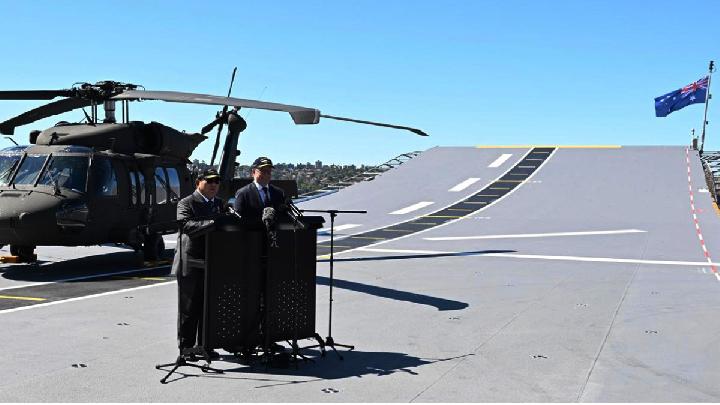
The leaders of Australia and Indonesia have announced that they are close to signing a new bilateral defense pact.
Prabowo Discusses Economic and Geopolitical Issues with Former Australian PM Paul Keating
6 jam lalu
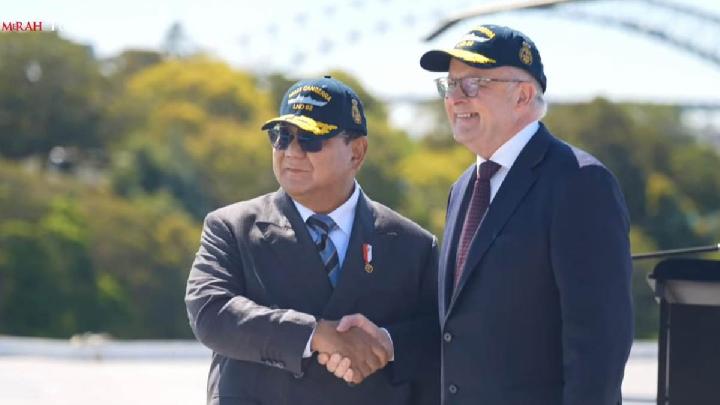
Prabowo said several topics were discussed with Keating. These include international relations, the economy, and geopolitics.
Indonesia and Australia Sign New Defense Cooperation Agreement
7 jam lalu
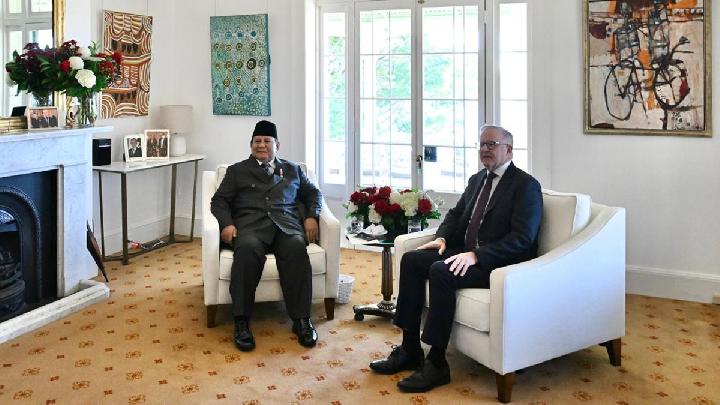
The agreement notably reaffirms the integrity and sovereignty of Indonesian territory.
Indonesia Opens to Global Collaboration on Carbon Market Growth
7 jam lalu
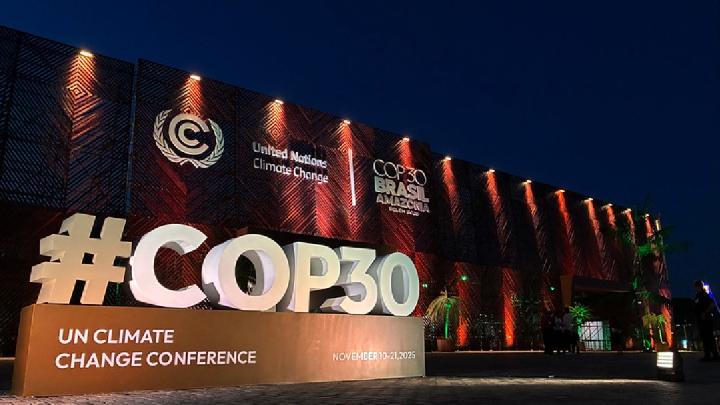
Indonesia is currently strengthening its national carbon market architecture by issuing Government Regulation No. 110 of 2025.
BMKG Issues High Wave Warning in Several Indonesian Waters
12 jam lalu

The Indonesian Meteorology, Climatology, and Geophysics Agency (BMKG) has issued an early warning of high waves in several Indonesian waters.
Observers Speak Out on Indonesia's U-17 World Cup Journey
12 jam lalu
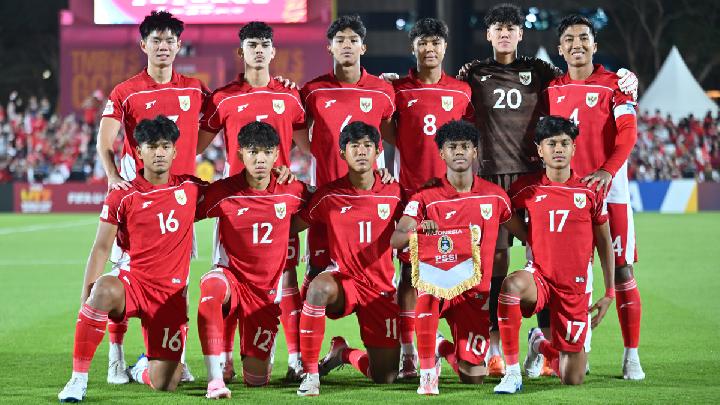
Football observer Ronny Pangemanan appreciates the journey of the U-17 Indonesia National Team in the FIFA U-17 World Cup 2025.
Indonesia's Prabowo to Meet Former Australian PM Paul Keating in Sydney
12 jam lalu

President Prabowo and Ex-PM Paul will meet to exchange ideas. The aim is to strengthen the relationship between Indonesia and Australia.
Indonesia Reveals Chronology of Cesium-137 Discovery in Cloves Shipped to the US
13 jam lalu
The FDA in the US detected Cesium-137 in clove products imported from PT Natural Java Spice in Surabaya, Indonesia.
COP30 Puts a Just Clean Energy Transition Center Stage; Is Indonesia Being Contradictory?
14 jam lalu
There is no more reason for many countries in the world to delay their commitment to the Paris Agreement by transitioning to clean energy.