
February 26, 2026 | 04:21 pm

TEMPO.CO, Jakarta - A rare celestial event is set to dazzle stargazers around the world this Saturday, February 28, 2026. A so-called “planetary parade” will allow observers to see six planets lined up in the evening sky shortly after sunset.
The spectacle is brief and requires a clear view toward the western horizon. According to the United States’ National Aeronautics and Space Administration (NASA), the inner planets Venus and Mercury will appear close to Saturn, while Neptune, Uranus, and Jupiter will also be visible in the night sky.
Which Planets You Can See
Venus, Mercury, and Saturn will be visible to the naked eye, though telescopes or binoculars will enhance the view. Venus and Mercury will sit low near the horizon, while Saturn will appear slightly higher.
Observers should note that some planets, including Neptune, will only be visible for roughly 30 to 45 minutes after sunset, according to a report by Live Science on February 22, 2026.
Neptune, appearing next to Saturn, will require a telescope with a diameter of at least 6 inches (15 centimeters) to observe. Jupiter, the solar system’s largest planet, can be found by looking south toward the Gemini constellation. It will shine as a bright, steady white light, unlike the twinkling of stars. Orion’s Belt can serve as a visual guide, roughly midway between Jupiter and the other planets.
Uranus will be visible with binoculars or a small telescope. Look below the Pleiades star cluster, also known as the “Seven Sisters,” in the Taurus constellation. Stargazers can locate it by extending a line from the three stars of Orion’s Belt: Alnitak, Alnilam, and Mintaka.
Moon Joins the Show
Adding to the celestial lineup, a nearly full moon, illuminated at about 92 percent, will be visible on the same night. It will appear close to the Beehive Cluster (M44), a bright star cluster located about 577 light-years from Earth.
What Comes Next: Lunar Eclipse
The planetary parade is just the prelude to another spectacular event. On March 3, 2026, a total lunar eclipse will occur as the “Worm Moon” passes through Earth’s shadow.
This so-called “blood moon” will turn the lunar surface a coppery red for approximately 58 minutes. The best views are expected from the western United States, Pacific islands, New Zealand, Australia, and East Asia.
For skywatchers, the next few nights promise a rare chance to witness multiple planets and the moon in a single glance, a reminder of the vast and ever-changing wonders above us.
Read: Study: DNA May Explain Why Music Gives Goosebumps
Click here to get the latest news updates from Tempo on Google News
The 2026 Planetary Parade: Don't Miss Out on This Rare Celestial Event!
2 hari lalu

Catch the rare planetary parade on February 28, 2026. Learn the best time to watch, safe tips for viewing and how to identify the planets.
7 Night Sky Events in February 2026: Don't Miss These Celestial Sights
21 hari lalu

Although February is short, this month is packed with night sky events. From 'ring of fire' to planet parade. Here are the key dates.
February 2026 Skywatch: Solar Eclipse, Full Moon, and Planets
23 hari lalu

A number of astronomical phenomena will occur during February 2026, including an annular solar eclipse.
January Night Sky Events: What to Watch and How to See Them
48 hari lalu

January's night sky events welcome 2026 with Jupiter at opposition, moon conjunctions, Orion at its peak, and more.
Planet Visible Tonight: Rare Planetary Alignment in August 2025
14 Agustus 2025

August 2025 showcases a breathtaking celestial display, with multiple planets forming a rare alignment. See what planets are visible tonight here.
Astronomers Observe Dawn of New Solar System
18 Juli 2025
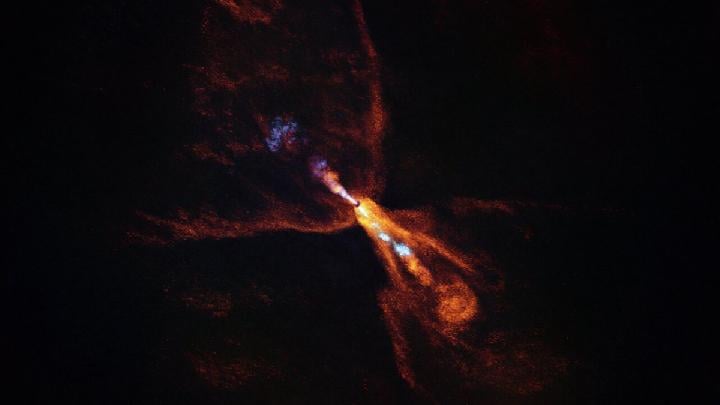
For the first time, astronomers have successfully observed the earliest stages of planet formation around a star outside our solar system.
Latest NASA Study Finds Venus Likely Still Geologically Active After Decades
26 Mei 2025

The surface of Venus is still being shaped by activities from within the planet, more than 30 years after NASA's Magellan spacecraft mapped its surface.
NASA Discovers Planet-Sized Diamond Five Times Larger Than Earth
11 April 2025

PSR J1719-1438b becomes one of the most striking discoveries in NASA's recent space exploration.
Get Ready to See the Planetary Parade Phenomenon in Early 2025, Visible with the Naked Eye
31 Desember 2024
The planet parade phenomenon will occur again in early 2025.
What Next as the Planet Gets Hotter
22 Juli 2023

The World Meteorological Organization says it is likely the planet will break the 1.5 degrees barrier sometime in the next five years.