February 12, 2026 | 10:46 am

Thousands of Indonesian nationals are caught in anti–digital fraud raids in Cambodia. The situation cannot be viewed in black-and-white terms as simply perpetrators or victims.
RAIDS targeting Indonesian nationals in Cambodia are once again testing how we read the issue of human trafficking. Rather than being understood as a problem of exploitation, these cases are often reduced either to labor disputes or, conversely, to mere individual crimes. Such black-and-white perspectives risk being misleading while obscuring the complexity of the problem.
Since mid-January 2026, more than 3,000 Indonesian migrant workers have sought refuge at the Indonesian Embassy in Phnom Penh following a massive crackdown on online scam centers in Cambodia. While some claim to be victims of human trafficking, there are lingering suspicions that others are suspected of being perpetrators—members of scam syndicates or online gambling operations.
Facts on the ground show that there are indeed at least two types of Indonesian nationals. Some were aware from the outset that they were working in the scam or online gambling industry, while others were deceived by promises of legal employment. Yet this distinction becomes blurred when both groups experience the same patterns: being transferred between companies, traded if they fail to meet targets, and deprived of freedom of movement. At this point, an employment relationship shifts into a power relationship.
Human trafficking cases cannot be assessed solely on the basis of initial intent, but also on whether exploitation occurs. An individual may enter Cambodia willingly, yet they become a victim once they lose the freedom to quit. Therefore, simplifying these cases as mere labor issues is a fundamental mistake. When human beings are treated as commodities, the state must not “wash its hands” of the matter.
However, the public also has the right to question the “everyone is a victim” narrative. Many Indonesians heading to Cambodia do not do so in complete ignorance. Some are well aware of the destination country’s reputation and realize that the scam industry is a cornerstone of the illegal economy there. They depart based on a calculation of risk and reward, often emboldened by promises of protection from friends or relatives who migrated before them.
Ignoring this fact is just as dangerous as criminalizing everyone. Without the right approach, the state risks repatriating “veteran scammers” equipped with cybercrime skills, expanding the domestic fraud ecosystem, and sending the wrong signal that migration into criminal industries carries almost no legal consequences.
The state’s obligation to protect its citizens remains, even when they are entangled in crimes abroad. This principle is often upheld when Indonesians face severe penalties overseas. It therefore becomes inconsistent if the state withdraws from the Cambodian cases on the grounds that “they knew the risks.”
However, state protection is not synonymous with absolving wrongdoing. Victims who were deceived from the outset must receive full protection. Those who entered knowingly but later lost their freedom must still be treated as victims of exploitation, accompanied by a thorough assessment of their potential criminal involvement.
Cambodia will not be the last case. Many Indonesians in Myanmar and other countries have experienced similar patterns. Protecting them without clear differentiation is misguided. Yet judging without protecting is negligent. A more responsible state stance is to protect its citizens from exploitation without turning a blind eye to criminal acts they may have committed.
Today's Top 3 News: Viral Cannibalism Photos Not Part of the Epstein Files
18 jam lalu
Here is the list of the top 3 news on Tempo English today.
Indonesian Ambassador to Cambodia: No Indications of Human Trafficking
1 hari lalu

The Indonesian Embassy in Cambodia is currently sheltering thousands of Indonesians who had worked in online scam centers. Some do not have passports.
Indonesians in Cambodia's Scam Syndicates
2 hari lalu

Dozens of former Indonesian online scam operators are left in limbo in Cambodia. They were tortured if they failed to meet targets.
Indonesian Online Scammers in Cambodia
3 hari lalu

The Indonesian Embassy sheltered hundreds of Indonesians who had worked as online scam operators.
Forced Into Online Scams, Four Indonesians in Cambodia Seek Embassy Help
17 hari lalu

Four Indonesians are among those seeking protection at the Indonesian Embassy in Phnom Penh, Cambodia, after becoming victims of human trafficking.
Indonesian Embassy in Phnom Penh Receives 1,700 Citizens Fleeing Online Scams
19 hari lalu
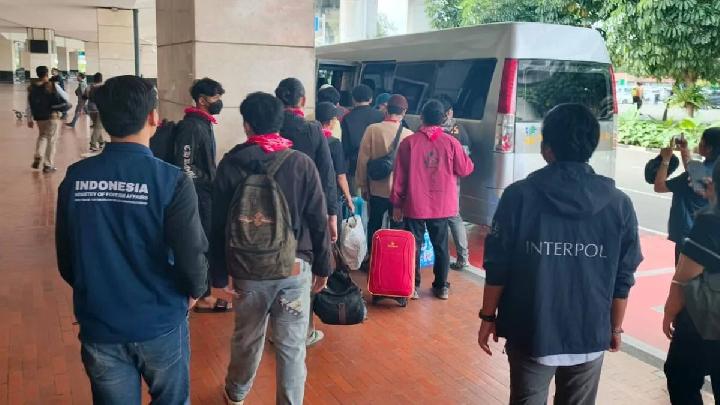
Between January 16-21, 2026, 1,726 Indonesians escaped online scam operations across Cambodia, the Foreign Affairs Ministry said.
Indonesian Police: Cambodia, Philippines Main Hubs for Human Trafficking
21 hari lalu

Indonesian Police stated that Cambodia and the Philippines are the two main destinations for human trafficking from Indonesia.
699 Indonesians Fall Victim to Scam Industry in Cambodia
21 hari lalu
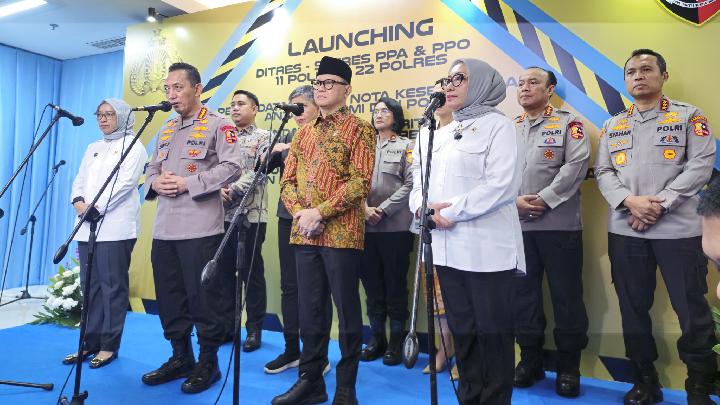
The National Police reveal that 699 Indonesian citizens were victims of human trafficking in an online scam industry operating in Cambodia.
375 Indonesians Report to Embassy in Cambodia After Leaving Scam Syndicate
23 hari lalu
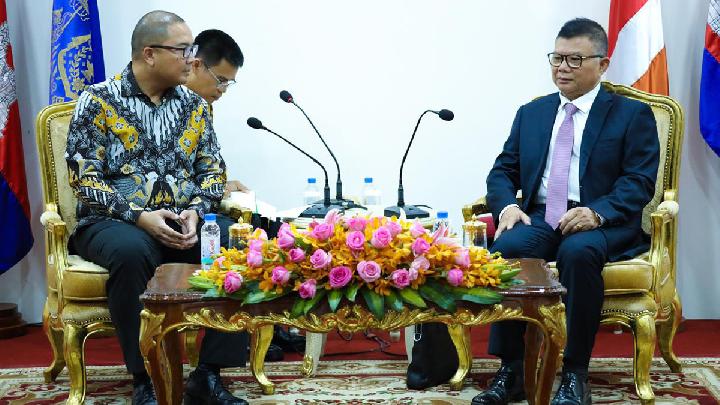
As many as 375 Indonesians reported themselves to the Indonesian Embassy in Phnom Penh, Cambodia, after being released from an online scam syndicate following a local authority raid.
US Pledges $45M for Thailand-Cambodia Border Stability
33 hari lalu

The United States will provide $45 million in funding to support stabilization between Thailand and Cambodia following the recent ceasefire.