January 2, 2026 | 06:31 am
TEMPO.CO, Jakarta - Sporadic youth movements are spreading to prevent Indonesia from falling into the military’s grip. These need endurance to ensure the struggle does not rapidly fade away.
Indonesia has been under Prabowo Subianto for a year, and the military is strengthening while opponents of the authoritarian regime are being squeezed from all sides. A question has arisen: is the movement by young people opposing militarism still relevant in this nation?
Prabowo, previously the Commander of the Indonesian Army Special Forces Command, has appointed retired officers to roles as ministers and heads of state agencies. He has also deployed active military personnel to implement policies ranging from the free nutritious food program to food self-sufficiency initiatives. This dominance of the military is a betrayal of the 1998 Reformasi because it weakens civil supremacy.
Civil society coalitions and student alliances refuse to stay silent. Through the #IndonesiaGelap (Dark Indonesia) hashtag, they have opposed military personnel being appointed to civilian posts. Protests have also targeted the House of Representatives, which abruptly moved to deliberate revisions to the TNI Law, despite it not being part of the original national legislative program.
The Tempo People of the Year 2025 edition chronicles a rhizomatic movement rising against militarism. Spanning university campuses, civil society groups, and economic alliances to indigenous communities, these diverse actors are united by a shared anxiety: they refuse to see a resurgence of the bitter experiences endured during the Soeharto era.
History records that youth movements have always been a fixture of Indonesia’s political subculture. They have consistently positioned themselves as catalysts for change, embodying the anxieties of their time, from the pre-independence era, the 1965-1966 political turmoil, the 1974 Malari disturbance, and the 1998 Reformasi.
The difference this time is that the movement—led primarily by the youth—is sporadic: it proliferates rapidly from the bottom up, devoid of a single figurehead. A number of universities have rejected legislation that rolls out the red carpet for the return of the military’s "dual function" (dwifungsi). Law students from across various campuses have filed for a judicial review of the TNI Law. Beyond the campus walls, the Aliansi Jogja Memanggil (Jogja Calling Alliance)—formerly known as Gejayan Memanggil—and the Cik Di Tiro Forum have amplified the outcry against the law, joined by a coalition of academics, non-governmental organizations, students, and critical artists.
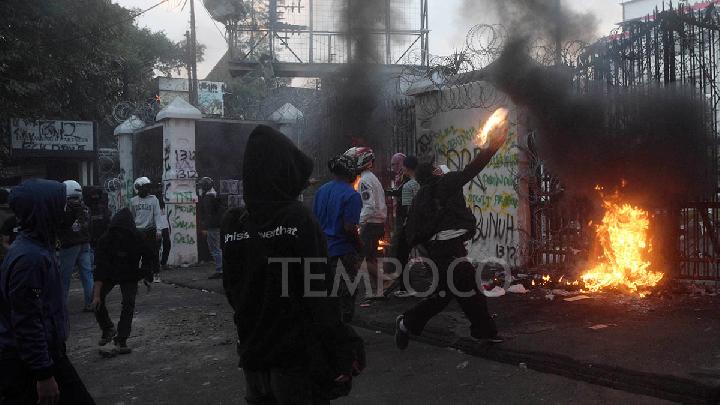
This all reached a peak in the August 2025 demonstrations. This wave of protests was the accumulation of public anger from a series of disappointments: from the weakening of the Corruption Eradication Commission and the passing of the Job Creation Law to the Peringatan Darurat (Emergency Alert) and Indonesia Gelap (Dark Indonesia). The common thread is the revival of authoritarianism and the retreat of democracy.
In the wake of the August 2025 protests, the struggle has grown increasingly arduous. Police are hunting down activists on charges of inciting the demonstrators, using digital footprints as the basis for summons and criminalization. Public education works have dwindled as civic space continues to shrink.
Youth movements also remain vulnerable to military co-optation. In the past, short-term political interests, such as the 1996 anti-communist movement, led students and the military to form an alliance to bring Sukarno down. Meanwhile, during the Reformasi era, programs like Kampus Bela Negara (State Defense Campus) have been designed to "embrace" some students while suppressing others.
This has led many young people to become disinterested in joining formal organizations, such as Student Executive Bodies (BEM). As a grassroots movement, they act collectively and reject established movement structures because of their tendency to be hierarchical.
However, the path they traverse is fraught with challenges. Prabowo is determined to add 150 infantry battalions annually across regencies and cities through 2029. The President envisions a military that controls the economy. The involvement of soldiers in forest management and the appointment of Untung Budiharto, a former member of the Tim Mawar (Rose Team, which was responsible for the kidnapping and disappearance of activists in 1997-1998), as the Chief Executive Officer of state-owned company Aneka Tambang are but small glimpses into this broader trend.
In other parts of the world, the practice of reintegrating the military into the civilian sphere has led to catastrophe. In Argentina, President Juan Perón’s financial support to the military between 1946 and 1955 increased the fiscal deficit. To secure the military's loyalty, he transferred significant funding from productive sectors into military spending. The nationalization of industries and the redistribution of assets into the hands of cronies and military officers triggered chronic inflation and a debt crisis, marking the beginning of Argentina’s decline.
Youth resistance can serve as a beacon to ensure that Argentina's story does not repeat itself in Indonesia. But for this to happen, barriers across classes and generations must be broken down, allowing the movement to spread across the nation. This movement requires endurance; solidarity and collective consciousness cannot be built overnight.
TNI Reform Agenda Wanes, Militarism on the Rise as Prabowo-Gibran Marks First Year
20 Oktober 2025

Imparsial says Prabowo-Gibran's government shows strong military consolidation tendencies during its first year.
Palace Addresses Controversy Over Active Military Officer as Bulog Director
11 Juli 2025

SOE Minister Erick Thohir appointed Major General Ahmad Rizal Ramdhani as the new President Director of the State Logistics Agency (Bulog).
Intimidation of Those Opposed to Militarism
4 Juni 2025

Intimidation of critics of the revised TNI Law is spreading. President Prabowo Subianto's government is becoming increasingly militaristic.
TNI Says No Militarization in Dedi Mulyadi's Military Barracks Program for Children
26 Mei 2025

TNI spokeperson supports West Java Governor Dedi Mulyadi's plan to send troubled children to military barracks, saying it can instill discipline.
KIKA Urges Police to Investigate Intimidation Against Detikcom Columnist
25 Mei 2025

Student suing the TNI Law and opinion columnist at Detikcom about militarism are allegedly facing intimidation.
UGM Student Alliance Camps Out to Protest Sexual Violence, Militarism on Campus
14 Mei 2025
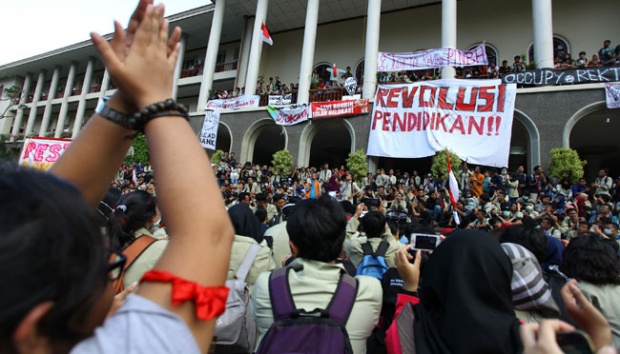
The UGM students plan to camp in front of the rectorate building, protesting the shrinking of safe spaces for students to voice concerns.
Military Presence on Campuses Threatens Academic Freedom, Activist Says
24 April 2025

Activist linked the military's presence to student protests against the new TNI Law, suggesting it sees their criticism as a threat.
YLBHI: TNI Law Brings 'A Darker Indonesia' Closer
20 Maret 2025

YLBHI asserts that the ratification of the TNI Law will bring back the militarism of the New Order era.
Natalius Pigai Dismisses Fears of Authoritarianism Revival as Mere Imagination
11 Maret 2025

Natalius Pigai downplays concerns over the resurgence of militarism and authoritarianism in Prabowo Subianto's government, calling them imagination.
On the Brink of Authoritarianism
4 Februari 2025

Militarism has strengthened in the 100 days of Prabowo Subianto's cabinet. It has given rise to competitive authoritarianism.